Tuesday, June 18, 2013
Joint statement in solidarity with the Turkish people
As the protests against the dictatorship of the AKP government have left two weeks behind, the police brutality escalated in Istanbul yesterday. The government rejected all just demands of the people and has opened an untitled war against the resistance. During the attacks that were carried out mainly in Taksim yesterday score numbers of people were injured and arrested, including people from all ages and professions. The Communist Party of Turkey has been at the front fighting against the police in solidarity with all resisting people.
During the clashes, many party members were injured as well. Taksim Solidarity, the group that was founded to stop the Taksim project prepared by the government and has become the speaker of the resistance in Taksim, has declared 13th June international day of solidarity with the resisting people in Turkey. The communist and workers' parties condemn the state terror carried out against the resisting people in Turkey. Here, we declare that we are in full solidarity with all forces in Turkey, including the Communist Party of Turkey.Everywhere is Taksim, resistance everywhere!
PADS, Algeria
Communist Party of Greece
Communist Party of Spain
Communist Party of Pakistan
AKEL
Parti Populaire Democratique (Unifié) Tunisia
Popular Front of Bahrain
Lebanese Communist Party
Democratic Front for Liberation of Palestine
Syrian Communist Party (Unified)
Popular Front for Liberation of Palestine
Communist party of Egypt
Front for the liberation of Palestine
Egyptian Socialist Party
Movement of the People – Lebanon
Communist Party of the USA
Parti communiste du Québec
Egyptian Communist Party
Communist Party of Australia
Communist Party of Macedonia
Communist Party of Peoples’ of Spain
German Communist Party
Hungarian Workers Party
New Communist Party of Yugoslavia
New Communist Party of Britain
Communist Party of Venezuela
Communist Party of Finland
Communist Party of Mexico
Belgian Workers Party
Communist Party of Canada
Communist Party of Ireland
Communist Party of Britain
Communist Party of Luxemburg

Friday, May 17, 2013
Camera Assassin!
Review

by
Neil Harris
THERE’S not too much separating the
capitalist world from the underworld – the “criminal classes”. In the end,
criminals are lazy capitalists; the mentality is much the same, it’s just the
work ethic that’s missing.
They tend to have
similar tastes when it comes to leisure activities too. So hanging around the
sports events, casinos, restaurants, nightclubs, bars and hotels favoured by
the rich, you’ll find an entertaining mixture of petty criminals, informants,
bent coppers, journalists and the occasional spy: all on the lookout for a good
story to sell.
In the 1970s and
1980s, Ian Cutler was up to his neck in all this as a staff photographer for
Rupert Murdoch’s News of the World
newspaper. Cutler made a fortune as a “snapper” but had a knack of annoying
powerful people; corrupt police officers and gangsters all took violent revenge
on him and he became well acquainted with prison food in his time.
Fallen on hard
times now, Cutler has been reduced to selling his self-published memoirs; Camera Assassin II, but your local
library isn’t going to be stocking this one any time soon. Ghost written by
Eddie Chapman, the burglar, con-artist and wartime double agent, this is a
foulmouthed insight into working life at the News of the World. Luckily
for New Worker readers, we’ve
carefully read through all the sordid tales of debauchery and excess so that
you do not have to.
It wasn’t his
first attempt to enter the literary world – he was involved with the
legendarily decadent Simon Regan in producing Scallywag, a ruder, cruder and poorer version of Private Eye magazine. Scallywag got sued out of existence by Prime
Minister John Major’s caterer although some old issues are still to be found hiding
in the murkier areas of the internet.
Cutler now
dishes the dirt on his former colleagues at the News of the World and a very grubby world it is too; a lying,
boozing, fraudulent world of prostitutes, long liquid lunches and inflated
expenses claims that earned the pre-Wapping “Fleet Street” its nickname of “The
Street of Shame”. Most of his colleagues seem to have been so preoccupied with
getting drunk and having underage sex that they had to resort to making up
stories for the paper. Above all, he revels in exposing the hypocrisy that
allows “newspapers” like the Sun and
the Daily Mail to claim that they
stand for press freedom.
There is no
indication that Murdoch approved of what went on but he was happy with the
circulation figures and the front pages. Occasionally, he would get involved
with the paper’s agenda and then their lying became political to supply him
with the features he craved.
Murdoch is
alleged to have been pre-occupied with “welfare scroungers” and Cutler details
how stories were made up for him using models and prostitutes photographed to
illustrate how people were working while claiming state benefits. “Every last
one of them was a setup. We’d go out, set up a picture, then (Ray) Chapman
would invent a story to go with them….”.
The left was
always a target for Murdoch so Cutler and his gang were happy to oblige. Ted
Knight, the Labour leader of Lambeth Council was a victim: “In efforts to
expose ‘Red Ted Knight’, (Ray) Chapman and Cutler paid black models to pose as
council workers moonlighting in council time with council equipment”.
The state-owned
British Leyland was another battlefield of class struggle and Cutler came up
with a fabricated front page story of workers sleeping on the job. Titled “The
Goodnight Shift”, this 1979 story was well timed to discredit the Joint Shop
Stewards Committee and was one of a number of “stories”’ used to smear the communist
chief shop steward, Derek Robinson and to justify his dismissal and
victimisation.
Usually it was
the vulnerable, the young and the poor who were their victims, with Cutler and
his colleagues sniggering at their misfortunes. This culture of sexual
exploitation and abuse is one that Jimmy Saville and his circle would have felt
at home in and probably were.
This was the
world of the capitalist media of the 1970s and 80s. Homophobic, sexist, racist
and revelling in sexual violence, these well paid scumbags created the
justification for the belittling and domination of more than half of the
working class – those who were female, gay or from ethnic minorities. That made
it all too easy to for them to take on the remainder: it’s called divide and
rule.
And then the News of the World moved to Wapping,
leaving behind the old Fleet Street, its drinking culture and 3,600 victimised
printers. It was now using new technology with a non-union workforce and the
papers were providing a steady stream of cash to fund Murdoch’s worldwide
ambitions. The new generation of media bosses running the propaganda machine
were sober, efficient people like Rebekah Wade and Andy Coulson but that’s
waiting for another book and a different author.
The book, written by Ian Cutler and
Eddie Chapman, has now been updated as Camera Assassin 111 and it can be downloaded
in Kindle or PDF format for just £2.95 at http://www.cameraassassin.co.uk/. Print copies
are sometimes available from website mail-order booksellers.
Monday, May 06, 2013
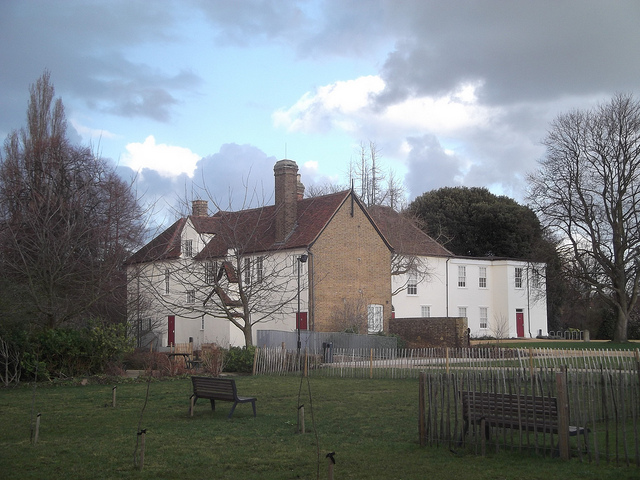
A manor in a housing estate
By
Carole Barclay
FOR SOMEONE who grew up in Dagenham,
Valence House has always had a special place in my heart and is a reminder of a
rural Dagenham long since forgotten. It is the only manor house left in the
borough and within its walls are relics and mementoes from Roman days right up
to the 21st century.
Some parts of
the house date back around 700 years and it was most recently a working farm
run by the May family until it was compulsorily purchased in 1921 to make way
for the building of what was to become the largest council estate in Europe.
The museum
opened its doors to the public in 1937 and was initially just a small
collection of finds run by the local library and open only a few afternoons a
month, while the rest of the house was used for public meetings and local
exhibitions. Two major renovations, including a major revamp in 2007 financed
partly by a Heritage Lottery grant have transformed it into one of finest local
museums in Greater London.
People settled
the area during the Stone Age and the display of their tools and other flint
implements is the path through which visitors wend their way through the
building. Finds include the “Dagenham Idol” – a Neolithic wooden totem
unearthed during sewage works in 1922. A scattering of finds testifies to the impact of four
centuries of Roman rule, while Saxon and medieval Dagenham is well represented
in the history of nearby Barking Abbey and the local manor houses which were
all swept away when the great Becontree council estate was built to provide
“homes fit for heroes” after the First World War.
In
the 20th century Dagenham was virtually synonymous with the Ford
motor company, which until recently provided employment for a large number of
workers. It was also known for the Dagenham Girl Pipers, a bagpipe marching
band set up by an eccentric Congregational church minister in the 1930s that
continues to entertain people to this day. You can see them in the small museum
cinema that screens a rotating series of films created by the Dagenham Cooperative
Film Society, which highlight life on the Becontree Estate.
The
nearby Valence Park, a fragment of the original estate, contains a children’s
playground while the museum grounds boast a beautiful herb garden that also
includes a restored Anderson air-raid shelter from the Second World War as well
as a bookshop, café and archive collection for students and scholars of all
ages. Valence House, like many estates
in Essex, was moated and the building is still surrounded by most of the
ancient water course, a haven for ducks and the local Becmain Angling Club!
Valence
House is not the easiest to find if you don’t know your way around the estate
so take a map with you. The nearest stations are Chadwell Heath and Dagenham
Heathway but they are both a 20 minutes walk away from the park. Admission is free
and the museum is open daily from 10am to 4pm, apart from Sundays at:
Valence House Museum
Becontree Avenue
Dagenham RM8 3HT
Saturday, April 27, 2013
US imperialism and the facts behind the Korean crisis
by Neil Harris
South
Korean military provocations directed at the Democratic People’s Republic of
Korea are a regular event and usually increase during the annual spring
military manoeuvres, conducted jointly with the United States. This year has
been different, both in the ferocity of the southern rhetoric and the way in which
it has been backed up by American nuclear threats.
On the 18th March, Pentagon press
secretary George Little told reporters that on 8th March B-52 bombers from
Andersen Air Force Base, Guam had flown to south Korea to simulate a nuclear
attack on the DPRK during war games known as Exercise Foal Eagle.
In a co-ordinated statement the same
day, US Deputy Defence secretary Ashton Carter confirmed during his visit to
south Korea observing the military exercises, that the B-52 flights are part of
the US Pacific Command programme called “Continuous Bomber Presence”. Little
said: “We will continue to fly these training missions as part of our ongoing
actions to enhance our strategic posture in the Asia-Pacific region.”
Confirming the B52’s nuclear role he continued:
“The Foal Eagle manoeuvres will highlight both the nuclear and conventional
capabilities of the B-52s.” He then stated that further flights would happen
the next day.
He didn’t have that much choice, as
earlier in the month two Russian military aircraft identified as TU-95 “bears”,
were seen circling Guam, no doubt observing preparations for the nuclear
element of the exercises which began in early March as part of the “Key
Resolve” manoeuvres. A second round of exercises known as Foal Eagle will
continue until the end of April.
Carter then confirmed that despite “The
Pivot”, the Obama administration’s shift of military priorities away from the
Middle East and towards confronting China and Russia in the Pacific Rim, their
occupation of the southern “Republic of Korea” (ROK) would continue: “The
Asia-Pacific rebalance is a priority. It’s a historic priority. We have the
resources to accomplish it and no matter what happens in the budget debates
that go on in the United States, our commitment to the Asia-Pacific rebalance
and our commitment to the United States-ROK Alliance will remain firm.”
The American posturing was further
ramped up by the south Korean newspaper, JoongAng Ilbo on the 13th March when
it quoted an unnamed “senior government official”: “we need to have a nuclear
weapon near the Korean Peninsula”. The official continued; “Among various
options — our own development, adoption of tactical nuclear weapons and utilising
the US nuclear umbrella — the third is the most realistic.”
The official didn’t specify where the
nuclear weapons were and gave the false impression that the US puppets in the
south had some control over the matter: “By not withdrawing US weapons
participating in the Korea-US military exercises, we decided to let them stay a
while and see what happens in North Korea,” he said. It looks likely that an
American submarine armed with nuclear warheads will now be stationed nearby:
“We decided to convene another Korea-US submarine drill after the Foal Eagle
training ends at the end of April,” the official stated. “We are still
negotiating, how to utilize the nuclear weapons after then.”
The negotiations are going to be
one-sided; America’s new anti-Chinese military priorities mean that troops and
bases are on the move. This has meant that US bases in the south are being
consolidated and moved away from the front line, the south is being forced to
pay more for its occupation.
Up till now, American tactical
battlefield nuclear weapons have been stationed in the south but strategic
weapons, intended for cities and civilians were not. America is cynically using
the threat of a nuclear attack on the north as a way of appeasing the south
while it changes its strategic priorities towards a confrontation with China.
For China and Russia, the mobilisation of strategic nuclear weapons in the
Pacific is a new and worrying threat.
Tuesday, April 09, 2013
The middle “class”
By Neil
Harris
“THERE’S nothing wrong
with trying to better yourself”, has been the battle cry of the upwardly mobile
for more than a century. From the Victorian era and Samuel Smiles’ self-help
movement onwards, it produced a world of mechanics’ institutes, correspondence
courses, night schools and even elocutionists.
Today a whole industry exists to offer extra tuition to children to get
them into the right school or university and all of this just to keep them out of
the working class. This desire to be “middle class” was the appeal, if not the real
power behind Thatcherism and that mattered because it brought about the
destruction of the post-war social-democratic consensus in the 1980’s. It also matters
because the middle class is such an important part of the social base of
fascism.
This is strange,
because for Marxists there should be no such thing as a “middle class”. We
avoid the issue – referring to the “middle strata” or the “petit-bourgeoisie”. For
us class isn’t a subjective decision – a matter of choice; an economic class is
a scientific description, an objective reality.
There are only two
economic classes, firstly the exploiters who own the means of production and
extract surplus value from working people’s labour. That theft of surplus value
is how they reproduce capital and make it grow, they are capitalists. Then
there is the working class; people who do not own the means of production and
can only live by selling their labour power to the capitalist in return for a
wage, which is barely more than subsistence. These are the only two economic
classes although there are sub groups like landlords and the lumpen
proletariat.
Marx also recognised
the existence of the “petit-bourgeoisie”, as a sub group of the ruling class.
These were the small scale producers, self-employed craftsmen and artisans who
owned their personal means of production. He saw this as a transitional class;
while a minority might grow their businesses until they became capitalists
themselves, the majority were doomed to sink back down to the proletariat as
their businesses failed or their means of production became outdated. They were
unable to reproduce capital because they could only exploit themselves or a
very small workforce. This doesn’t come close to what we understand as a middle
class today, but then in Marx’s day the state had hardly evolved and capitalist
enterprises were often no bigger than a single factory. If there was any middle
class then, it only amounted to a few thousands of civil servants and railway
clerks. Czarist Russia was even more backward with the result that Lenin and
Stalin did not analyse a middle “class”; it wasn’t significant.
If we exclude the
petit-bourgeoisie, then the middle class are a group of people who still have
to work to earn a living – they are forced to sell their labour power like any
other worker, in order to live. The loss of their job will inevitably involve
the loss of everything that came with it: the car, the holidays, the lifestyle
and even the house. They are still workers on a subsistence level, it’s just that
they don’t see it that way.
On the contrary, it’s
the middle class who are the bedrock of support for conservatism and reaction,
from Poujade to Le Pen, from the Northern league to Thatcher. Once known in Britain as “working class Tories”,
in times of crisis the middle classes were always the first recruiting ground
for fascism. When Hitler was looking for early recruits it was the students and
the unemployed officer class that he turned to first. Later when he had the
money, he hired the street thugs.
While we alone refuse
to accept that a middle class exists, the enemies of the working class have
been busy. In the 19th century sociology appeared, a whole social
science intended to create a non-Marxist definition of class so that it would
be possible to invent a class system free of the class struggle.
In the early 20th
century the “Chicago School” of sociologists found they could make a good
living selling the idea of class collaboration and in so doing became the
ideological flag bearers for America’s businesses. Later, they produced the
academic argument for McCarthyism and wrote the text books that explained to
generations of students that anti-capitalist consciousness was deviant, abnormal
behaviour. The stable, compliant middle class was the “normal” that 1950’s
American capitalism dreamed of and promoted to the rest of the world.
Some Marxists have
tried to use Marx’s references to a “Labour Aristocracy”, to explain this
phenomenon. It referred to a trade union elite that Marx had described in some
frustration: skilled working class people given greater job security and higher
wages paid for by the super-exploitation of workers in the empire. It was
capitalism buying off British workers with the profits of imperialism. While today
we all benefit directly or indirectly from the super profits that imperialism
makes in the developing world, such an “Aristocracy”, moderate and reactionary,
certainly doesn’t exist now.
The tube drivers,
electricians and other workers on high earnings gain them due to good, militant
union organisation or a skills shortage. Just like computer programmers until
recently or the print workers and engineers in the 1970’s, the benefits last
only as long as the militancy or the shortage lasts; this is no “middle class”.
Neither was the Victorian “labour aristocracy” a middle class as we now
understand it; it probably resulted from similar circumstances.
In the 1950’s and 60’s
Marxists tried to explain the middle class as a false consciousness: people who
have a system of beliefs that have no basis in reality. Religion or quack medicines
are good examples of this.
Our problem is that in
any modern capitalist country there are many millions of people who define themselves
as middle class. While it is fairly easy to show to a non-believer that
miracles do not happen or that homeopathy has no medical basis, a mass delusion
of the middle classes does not explain why many millions of working class
people also recognise that this class exists. For workers, the “middle class”
is real and is a term of everyday abuse; they are not suffering from any
delusion.
In the same way, opinion
pollsters can accurately predict voting behaviour based on an analysis of a
class system which includes the middle class. Bourgeois political parties win
elections by selecting policies to appeal to the “middle ground”. Marketing
experts design goods and services just for them. Newspapers sell by appealing
to their prejudices. Advertising executives target them. In short, if so many
capitalists can make money from them and if any worker can spot one at 100
yards, then perhaps it is our view of reality that needs to change.
In fact it’s very easy:
we just need to play a little game. Get a group of people together and call out
jobs, then get everyone to call out “middle class” or “working class”. There
won’t be many disagreements, where there are, a short discussion will bring
agreement.
For example; doctor,
lawyer, teacher, social worker, probation officer and lecturer are all middle
class. Labourer, plumber, bricklayer,
bus driver, supermarket worker, cleaner, electrician are all working class. So
much, so simple. It still doesn’t
explain what being middle class actually is and what role it plays in society.
Interestingly it’s not
about earnings; you can be middle class and poor, working class and wealthy. A
teacher or a social worker earns less than a tube driver or an electrician,
because of the strength of working class union militancy or a shortage of
skills in the job market.
It’s not about culture,
you can love the ballet and the theatre but if you’re a bus driver it’s not
going raise you to the middle class. But middle class people do share a culture
that separates them from the working class. They share a way of speaking and
acting, they shop together and they go to the same schools. Their manner and
dress, where they go on holiday all marks them out in subtle ways, as it is
designed to do. This is a club and the rules are rigid and complicated.
It’s not really about
wealth, property ownership or how expensive your car is either; if you are a
worker and you win the lottery it won’t make you middle class. Many workers
earn more, with better houses and cars than the middle classes. But if you are
middle class you need to live in the right area so you can socialise with the
right people and your kids can go to the right school. If you don’t have enough
money, you won’t be able to stay in the club for long.
Being middle class
isn’t hereditary; it is not a caste, although most middle class people had
middle class parents. If you are working class you may, with difficulty, be
able to move up. You can certainly get your children up the ladder. Equally, if
you are a middle class parent you have a real struggle on your hands to keep
your kids in the same class. They must learn to speak and dress right, go to
the right school, get the right qualifications and into a suitable university.
Then there’s the job to find. Its 25 years of struggle with that constant,
nagging fear that your child will drop back down. It’s not just about
education, but a good higher education is crucial in obtaining a middle class
job.
To understand all this
we need to go back to the comparison between jobs and to look at some of the
contradictions they reveal. For example, lots of people work at banks or
building societies, but they come from different classes. A counter clerk is
working class, the manager is middle class.
A soldier or a police constable is working class, an officer or a senior
police officer is middle class (in the case of the army, the senior officers
are usually from the landowning ruling class). A salesman is working class, a senior
manager at the firm middle class. While a nurse is a worker, a doctor or a
consultant is middle class, and this is the key. A nurse who obtains a degree
and a management role is on the way to becoming middle class.
You can’t be a manual
worker and be middle class, but not all non-manual workers are middle class.
It’s often a managerial role, but not all middle class jobs are managerial.
It’s always an intellectual role, hence the importance of a higher education.
While workers have no
authority, all middle class jobs have some degree of authority over working
people, or the future prospect of obtaining it. Counter clerks at the job
centre are working class while civil servants in other equally low paid jobs
are middle class because over time seniority will raise them to a level where
they have authority over others. The counter clerk will always be a counter
clerk.
Middle class jobs have
a degree of autonomy – workers have no control over their working lives unless
they win it collectively through militant trade union organisation. A bank
manager can issue a loan, extend an overdraft or call in a loan within the
limits set down by head office. A counter clerk cannot. An officer orders his
men within the political limits set down by his masters, a soldier just obeys
orders. An NHS doctor can spend state resources within limits, a nurse cannot.
The middle class is not
uniform, it falls into two parts, depending whether they work in the state or
private sector. Those who work for capitalist firms are direct intermediaries
between the capitalists and the workers, even if the capitalists happen to be
in London or New York and the workers are in China or India. This is in return
for doing the bosses dirty work; the boring everyday routine tasks like
administration and management, as well as the unpleasant tasks like firing
people. There are privileges too; higher wages and better job security. They
are the managers in suits; they don’t own the means of production but they
administer them for the ruling class.
Middle class people in the
state sector have a different and more abstract relationship to the ruling
class: they act as intermediaries between the state (what Marx called the
organising committee of the bourgeoisie) and the citizen. It’s the middle
classes who are at the frontline of state control: probation officers and
social workers making crucial decisions about the lives of working class people
every day, based on guidelines set down by the state.
It is a middle class
role to distribute scarce state resources: Doctors deciding what treatment
their patients should receive are literally deciding who should live and who
should die.
The middle class often
controls opportunities; teachers pass on to working class children the
worldview of the ruling class through the state’s national curriculum. It’s the teacher who explains to those
children the limits that will be set on their lives and ambitions; the working
class kids who are told that they are only good for sport and manual work while
the middle class kids get the extra effort. Lecturers set out the kind of
knowledge that their students’ future employers are looking for.
When the police and
army use state violence, it’s the middle class who give the orders but they
don’t decide what those orders are. What they all have in common is that they
act as an intermediary between the ruling class’s state and the working class.
This is all hard work,
there is a constant struggle to stay above and separate to the working class.
There is a constant fear of falling back down. The superficial fashions, the
shops you use, the holidays, the attitudes are all so carefully acquired and
are an attempt to mimic the fashions and attitudes of the ruling class.
So, in the 1930’s when
being an elocutionist was a lucrative career, it was because it was a time when
it was vital to acquire a reasonable copy of an aristocratic accent, rather
like the late Queen Mother, or the Queen in1953. You ardently supported either
Oxford or Cambridge in the boat race even though you lived in London and
neither you nor your kids were ever going to see the inside of a university,
let alone row. The bosses, however, had done that and so would their children.
Nowadays, things have
changed on the surface. The ruling class have an accent which comes from
somewhere between New England and the Cotswolds, with a faint touch of cockney
added in for irony. They are more likely to follow F1 Grand Prix than the boat
race and as likely to go to Harvard Business School as to Oxbridge. It may just
be fashion, but it’s still the fashion of the ruling class and it’s called taste.
It’s a real struggle at
times to keep up with those ever changing ruling class fashions but keeping up
is essential; it’s to separate you from the working class, to show your
employers that you look and think like them and that you can be relied on to
carry out their orders. It’s about demonstrating your loyalty. Middle class
people don’t own a business (that would make them petit-bourgeois) but in
return for doing the boss’s dirty work, they have extra job security and higher
wages.
The result of all this
is that while the middle class is not an economic class it has an economic role
to play; it acts as an intermediary between the ruling class and the working
class, a transmission belt. It isn’t part of the ruling class, however much its
members would like it to be, it is a sub class of the working class.
It may be subjective –
a matter of choice, but it is also a real, existing phenomenon and is therefore
objective too. It exists. It is significant. It’s also probably time to
recognise that if the rest of the world has been calling them “middle class”
for 100 years, then Marxists will reluctantly have to accept the term.
FOR MANY years, the reformist
Communist Party of Great Britain had the position that the middle class always
had the potential to go fascist and therefore to prevent it, concessions would
have to be made to them by the working class. This is not unlike the position
of social democracy: that elections can’t be won without winning the middle
class, even though this is at the expense of working class interests. In both
cases, this is just plain class collaboration.
The middle class may be
an objective reality, something that exists, but that does not make it an
economic class. Membership is a choice people make, it is subjective. In fact,
it is precisely because the middle class have chosen to segregate themselves
from the workers that no concessions should be made to them. Although they are
part of the working class, they have voluntarily adopted the reactionary
positions as well as the superficial mannerisms of the ruling class. This is in
order to gain the trust of that class, for their own advantage.
Middle class people are
much less likely to be in a union and far more likely to repeat the anti-union
attitudes of the reactionary press. In the same way, racism, which is always a
ruling class position, a component of imperialism, is adopted by the middle
class who then use it to divide the working class against itself. The majority
of the middle class are not going to change their views; this is a scab class.
We are allowed to make fun of them. There is, however, a minority who do, in
rare circumstances, take a different path.
In a revolutionary
situation (when the working class can no longer continue to live in the old way
and the ruling class cannot continue
to rule in the old way) the ruling class temporarily waivers, uncertain how to
continue. This uncertainty is transmitted to the middle class. They dither too.
The majority will follow the direction the ruling class eventually takes and
this will lead them to reaction, counter-revolution or fascism.
In Britain during the
1970s and 80s, when there was an acute class struggle, most of the middle class
supported what was to become Thatcherism, while a small minority went fascist;
that reflected the mix of views amongst the ruling class. Had the situation
spun out of control, the mix would have changed.
By contrast, a minority
can also become an auxiliary to the working class, but they follow that class
not because of concessions but because they have accepted the hegemony or
leadership of that class.
So in the 1970s and 80s,
many middle class occupations (like social workers and teachers) were drawn to
trades unionism and militancy. Never by any means a majority in those
occupations, this progressive minority was acknowledging the hegemony of the
working class. As that working class leadership weakened, so did the organisation
and militancy of those middle class groups, to be replaced by liberalism. This had been the “1968 generation” of student
radicals, who while trainee members of the middle class had been a progressive
minority who rebelled against their future.
The position of the
middle class is just as crucial after a revolution and during the building of
socialism, as in the Soviet Union or today’s Cuba. Following the October Revolution
and the establishment of a proletarian dictatorship in Russia, there was a long
and harsh period when “he who does not work, does not eat”. More than that, manual
workers rations’ were set higher than other groups and workers had votes which outweighed
those of other classes. Whether it was university places or housing, workers
went straight to the front of the queue. This really was a working class
dictatorship. At that time, the old
ruling class had been destroyed and had lost its ownership of the means of
production (land, factories, machinery).
There was nothing recognisable as a middle class, or more accurately in
the Soviet context an “intelligentsia”.
Everyone wanted to be a worker, everyone wanted to eat.
This changed as the
Soviet economy grew, developed and became complex. It needed managers,
administrators and civil servants. After the 1936 constitution written by Bukharin
created a “state of all the people” in place of the dictatorship of the
proletariat, the bias towards the working class started to fall away. This process
accelerated during the 1950s.
Before then there had just
been the working class and the peasants – a self-employed petit-bourgeoisie,
split into poor and rich. The Soviets allied themselves to the poor peasants,
crushing the wealthy, exploiting peasantry. Collectivisation transformed the
poor peasantry into a rural working class. Farms were combined and became
social property, while the land itself was nationalised. This petit-bourgeoisie
had ceased to exist as a class, although its former members and their children
remained and were a continuing source of capitalist ideas and anti-Soviet
sentiment.
However, the “intelligentsia”,
which on the surface appeared to be made up of creative people: writers,
lecturers, artists, musicians, dancers, architects and journalists, had become a
large and increasingly privileged urban group by the 1960s and 70s. In fact, the
intelligentsia was a euphemism that also included occupations in the bureaucracy:
the managers, administrators, government officials, party officials, lawyers,
prosecutors, the security organs, education and health workers.
These functionaries had
become intermediaries between the workers’ state and the workers. Instead of
acting as the servants of the working class, they acquired interests of their
own. Where once party membership was reserved for workers of good standing in
the workplace, it was now the goal of this group.
They gave themselves
special privileges – better food, better housing, and foreign travel. Better
housing in better areas with better schools and pioneer clubs to get their
children into the more prized university places, the ones that gave access to
the privileged jobs. Socially and politically, they separated themselves from
the working class. In effect, they became a middle class similar to what we are
used to here in the West. The result was that the workers became alienated from
their own state. There was a common Russian saying: ”The shit rises to the top,”
which expressed both the reality and the alienation.
All of which has a
familiar ring for us in the West and all of which was a departure from Leninist
standards. It was Lenin who said in What
is to be done? that “all distinctions between workers and intellectuals
must be obliterated”, and yet in the Soviet Union of Khrushchev’s time onwards,
the intelligentsia were to be elevated above the workers. By the end, the
workers had also become alienated from their own party, the Communist Party.
The writings of Gramsci
are important here, a revolutionary Marxist-Leninist who remained true to the
international of Lenin and Stalin, even when he was dying in a fascist jail. He
should not be held responsible for those revisionists and reformists who
distorted his writings after his death.
On the subject of
intellectuals he wrote famously: “All men are intellectuals one could therefore
say, but not all men have in society the function of intellectuals”. By which he meant that all human beings are
thinking beings. All human beings use their intellect, in everyday life and at
work, whatever that work is. The working class are just as capable of
organically producing intellectuals as the bourgeoisie, but in a capitalist
society it is rare for working class people to be given the social function of
an intellectual.
We can take this
further: that in increasingly complex capitalist societies, the social function
of an intellectual is something that the ruling class reserves for itself and
for those who have demonstrated their suitability and above all, their loyalty.
It is a role reserved for the middle class. The ruling class maintains a
monopoly over intellectual/managerial jobs, what Gramsci called “the social
function of an intellectual”, precisely to maintain its control over the means
of production and over society as a whole. This is as much a part of the
dictatorship of the bourgeoisie as the police or army using force to crush
dissent.
Gramsci saw the
function of the party as being to develop and direct the activity of organic
working class intellectuals, to create the revolutionary consciousness that the
working class needs to defeat capitalism. It is clear that he agreed with Lenin
on the need to destroy the division between the intellectuals and the workers.
We should also take
this further; it is clear that the revolutionary consciousness of these organic
working class intellectuals is the powerhouse both of revolutions and of socialist
states. The party must be of the working class if it is to lead that class, in
revolution naturally, but also under socialism.
For us, as for Gramsci,
the task is to build every member of the party into an intellectual capable of
leading the class. Equally,
of course, we must never lose sight that making revolution is not just an
intellectual activity, there is hard, practical work to be done. The party and
the class also need to learn lessons from the bourgeoisie on how their
dictatorship operates.
So, while the Soviet
Union had a functioning dictatorship of the proletariat and the workers were
the ruling class, they produced their own intelligentsia. In this “world turned upside down,” it became
necessary for a while, to pretend to be working class to get on. To get to the
best university or to apply for an elite career, you had to show your working
class roots. Nothing helped more than coming from a mining or engineering
family. For those who didn’t have that ”privileged” background, they often tried
to make it up. Everyone spoke with a working class accent, they all dressed
like workers.
But the middle class,
as it grew, had attitudes little different from their counterparts in the West.
As the dictatorship was relaxed, they took advantage of that freedom. At some
point, long abandoned business suits re-appeared, workers caps were discarded. The
jobs that had once gone to the working class as of right started to be diverted
to the middle class and with them came new privileges. Instead of being
grateful, as the privileges increased so did the demands; for foreign travel,
foreign goods, technology, a car, all far beyond the reach of workers and
beyond the ability of the Soviet Union to supply fairly. With each advance,
they demanded more.
It’s no accident that
the West and in particular the CIA, focussed on the Soviet intelligentsia from
the late 1940s until the end. Free books and magazines, radio broadcasts,
exchange visits, all promoted the western middle class lifestyle. Never worried
about working people, the Congress for Cultural Freedom, Encounter magazine, the cultural exchanges, were all aimed at what
the West saw as a middle class and what the Soviets termed the intelligentsia.
What the CIA realised
was that whatever concessions were made, the Soviets could never give this
group what they really wanted – the restoration of capitalism. The result was that in the absence of a
Russian ruling class that would do what they wanted; the middle class shifted
its allegiance from the Soviet working class to the international ruling class,
adopting their slogan of “democracy and freedom”. In practise this meant
democracy for capitalists and freedom from working class rule.
With the collapse of
the Soviet Union, all the alternative analyses were shown to be wrong. Karl Korsch and the council communists were
wrong in the 1920’s when they believed that the middle class had captured the Soviet
state. If that was right the middle class would have fought to preserve the
Soviet state to maintain their privileges, instead of being in the forefront of
bringing about its destruction.
Milovan Djilas’s “new
class”, a position not far from some Trotskyite positions, was also wrong. He
believed that the Soviet bureaucracy was a new ruling class. While they certainly enjoyed privileges at
the expense of the working class, the bureaucracy didn’t own anything at all –
not the means of production, the land or even their dachas. If they had, they
would have fought to save the Soviet Union in order to protect their property.
In fact, the Soviet
middle class believed that only the collapse of the Soviet Union would give
them what they wanted and they were right. If the means of production belonged
to the workers state, the only way of expropriating that property was to
destroy the workers state. That is what
they worked for. But when the Soviet Union actually fell and the assets were
divided up amongst the thieves, it was the unknown Berezovsky’s and Abramovich’s
who really prospered, not the nomenklatura who had dominated the state and the
party from the Brezhnev era onwards. They had to be content with the
left-overs. The “New Russians” never owned or controlled the means of
production until they stole them.
That these attitudes
existed is sad but not tragic; the tragedy is that the Soviet working class
were so alienated from their own state that they did not fight to protect it.
That the trades unions were so removed from the workers they represented that
they could not lead the fight to save their factories and that the communist
party had become so separated from the working class that it could not organise
a fight back.
This is the pressure on
Cuba today, where workers earn more than doctors and civil servants. Those who
see themselves as middle class and above the workers see the privileges their
position would win them in America. Some support the revolution and follow the
leadership of the working class. Some emigrate. Some of them remain where they
are but quietly transfer their allegiance from the Cuban working class, their
current ruling class, to the ruling classes of America or Spain, who they see
as capable of bringing them the privileges they feel they deserve.
All socialist societies
find themselves in this position whether it is the German Democratic Republic
facing West Germany, the Democratic People’s Republic of Korea facing South
Korea or China and Cuba facing America. They all have the same decision to make:
whether to strengthen the dictatorship of the proletariat and win away those
sections of the middle class who will accept working class leadership or to
elevate the middle class above the working class. Anything other than
strengthening the dictatorship of the proletariat will eventually have only one
outcome, the same endgame we saw played out in the Soviet Union. This is why all
those years ago, Stalin famously stated that after the abolition of the ruling
class and during socialism, the class struggle intensifies.
Subscribe to:
Posts (Atom)