Monday, July 22, 2013

Tools of imperialism


By Neil Harris

AFTER the overthrow of the Egyptian government, Robert Fisk writing in the Independent asked; “When is a military coup not a military coup?”  His answer was “When America says it isn’t.”
That hypocrisy is normal these days; Bradley Manning is in jail, awaiting a long prison sentence for whistle-blowing American atrocities in Iraq while John Kiriakou, a whistle-blower  and former CIA officer is the only person to be jailed as a result of the US torture programme. He has just started two and a half years in prison for revealing that a CIA officer destroyed the video evidence of the torture. She has since been promoted to head of “operations”.
With Julian Assange of Wikileaks holed up in the Ecuadorian Embassy and Edward Snowden on the run for exposing the National Security Agency’s spying, you could get the idea that the American government doesn’t like whistle-blowing or internet activism. That isn’t always the case; the American government finds the internet very helpful as a tool for propaganda as this quote from “Radio Free Asia” shows:
“The Internet has emerged as a crucial platform for freedom of expression and the exchange of ideas and information. Access to an open Internet offers an opportunity for a global citizenry to freely communicate, collaborate, and exchange ideas. Unfortunately hundreds of millions of individuals’ online interactions are being monitored and obstructed by repressive governments. These government actions limit the ability for citizens to take full advantage of the powerful communications platform that the Internet has become.”
America has two “Public Diplomacy” programmes – these are the open, legal methods of destabilising governments and politicians that America doesn’t agree with. It never does this directly, it uses a series of “fronts” to hide the source of the money, although as we’ve shown in the past it isn’t that hard to follow the trail of the money back to base.
While US State Department activities often feature in this paper, “The Broadcast Board of Governors” (BBG) is separate and deals with radio and television propaganda broadcasts around the world – most of which were once funded by the CIA. It covers the old cold war stations; Radio Free Europe and Voice of America as well as “Radio Free Asia”
 “…the United States Congress recognised Radio Free Asia (RFA), through the Broadcasting Board of Governors (BBG), as an engine to empower a global citizenry to overcome governments that illegitimately block, censor, and curb the potential of the Internet as a free speech zone.”
The targets change with America’s foreign policy agenda – right now Cuba and the Middle East are top priorities while China is important too, which is where “Radio Free Asia” comes in. The BBG has also embraced the internet with enthusiasm:
“The Internet has emerged as a crucial platform for freedom of expression and the exchange of ideas and information. Access to an open Internet offers an opportunity for a global citizenry to freely communicate, collaborate, and exchange ideas. Unfortunately hundreds of millions of individuals’ online interactions are being monitored and obstructed by repressive governments. These government actions limit the ability for citizens to take full advantage of the powerful communications platform that the Internet has become.”
In order to expand its activities, the “Open Technology Fund” was set up last year, to exploit the internet and the new media by directing and organising the many well-meaning people who want to do “good”, but don’t look hard enough at the causes they are supporting.
Right now, the fund is advertising for new ideas and proposals, money no object as usual. To help prospective fundees get the picture, the fund helpfully lists some of the organisations it already supports.
Edward Snowden might have found “Globaleaks” helpful:
“GlobaLeaks is the first open-source whistle-blowing framework. It empowers anyone to easily set up and maintain a whistle-blowing platform. GlobaLeaks can help many different types of users: media organisations, activist groups, corporations and public agencies.”
The newspapers who reported the revelations about the National Security Agency may have found the Martus Project helpful:
“Journalists and human rights defenders face grave threats to themselves and to their sources that trust them with their stories. As more journalists use technology to store and manage their data, more perpetrators try to attack that technology. Benetech’s Martus is a tool aimed at providing journalists with a means of transmitting information, while protecting their sources and themselves”.
Journalists or human rights activists worried about their security might welcome help from the LEAP Encryption Access Project:
“LEAP is a non-profit dedicated to giving all internet users access to secure communication. Our focus is on adapting encryption technology to make it easy to use and widely available.”
No state is ever going to be able to get millions of people in other countries to do what it wants by being open about it – they need a lot of little organisations, all apparently “independent” and non-profitmaking to do the work for them. “Open ITP” seems almost too good to be true:
“Open ITP supports and incubates a collection of free and open source projects that enable anonymous, secure, reliable, and unrestricted communication on the Internet. Its goal is to enable people to talk directly to each other without being censored, surveilled or restricted.”
Of course, it is too good to be true, it’s another front for US law enforcement like “TOR” (The Onion Router), which the New Worker previously exposed as a website that purports to offer anonymity to those who want to hide their activities from governments but which was created and developed by the Office of Naval Intelligence and is currently funded by various fronts for the US Government.
The internet isn’t straightforward any more – in developing countries internet access isn’t easy, the cost of a computer is high and landlines are unreliable. Mobile phone technology sidesteps many of these problems and there is a stream of second hand phones and smart phones being sold to the Third World to satisfy the demand. As a result, the new media are just as important in poorer countries as they are in the West. RFA has realised the potential and is exploiting this with “The Guardian Project” which aims to:
“Create easy to use apps, open-source firmware MODs, and customised, commercial mobile phones that can be used and deployed around the world, by any person looking to protect their communications and personal data from unjust intrusion and monitoring.”
With all these projects, the only protection is from the governments that America does not approve of. The US government always ensures it has access to all this information and uses it to further its foreign policy aims and to identify individuals and causes it does not agree with. Use them at your peril.


Sunday, July 21, 2013

The necessity of revolution

by Eric Trevett

HUMAN beings first emerged and developed from a class of primates that had a large family group social structure and at all stages of development humans have always been social beings. Early humans maintained the collective group because isolated individuals, especially if they were mothers and infants, could not survive.
Humans have always been social beings and in the first phase of human existence they survived on the basis of food gathering and hunting. Their diet would probably have included insects and their life was very harsh.
Science and art were both based on observing nature. Gradually over the millennia the knowledge acquired from these observations led to animal husbandry and arable farming being established. The ability to learn from experience and pass on knowledge proved that humans could do what no other animal could aspire to. Humans developed the power to be able to foresee the future and consciously make changes in their mode of living and to the environment generally.
In changing the world early humans changed themselves. Without this the continuous advance in knowledge up to modern science and technology could never have been achieved.
The point is that in the womb of primitive society development was taking place that created the opportunity for a new society to be born.
Trade was established as nomadic herders met each other, or met settled arable farmers, and exchanged goods. This was done at first by straight barter but later exchange was made easier by the first coinage. Gold discs carrying an image of a cow to show they represented the exchange value of a cow but were easier to carry about in a pocket or bag.
This gave rise to the beginnings of the notion of private property and wealth that could be accumulated — not by tending animals or working in the fields or crafting implements or ornaments but simply by buying the products of other people’s labour at one price and selling them at a higher price.
This undermined the tribal principles of common ownership and gave rise to the possibility that, like cattle and sheep, people could also become private property — slaves. The most common routes to becoming a slave were either being taken prisoner in a war or falling into unpayable debt. This was the beginning of slave-based societies, where one class, the owners of the slaves and the means of production, controlled the labour of the slaves to create more wealth for themselves. Society divided into classes.
Slave society had to impose its authority on the slaves and created a state or armed bodies of men to coerce slaves against rebellion or absconding. Slave societies were very labour intensive. Huge numbers of slaves worked under the direction of people who were beginning to acquire knowledge of mathematics and engineering, leading to remarkable achievements. People began to use horses and produced war chariots and complex giant catapults as weapons. Building, mining and the production of food and other commodities became organised on a large scale, leading to creations like the Roman systems of roads and aqueducts — some of which still stand today.
The advancing technology also led to the possibility of new forms of exploitative society, like feudalism, which gave serfs a motive to work. Under slavery the workforce has no incentive to work.
The economic factor has always been basic to the development of the character of society and the ideas and forces for a new society grow in the womb of the old society. It is a common factor in feudalism and capitalism.
In order to change it is necessary to unleash new productive forces to satisfy the needs and desires of successive ruling classes. The factor of exploitation was easy to see in the circumstances of slavery and in the development and revolutionary transformation of feudalism, where the serf was tied to the land to serve the lord of the manor’s requirements. But they also had a certain degree of freedom and could develop cottage industries.
Through feudalism and capitalism the development of technology has enhanced the productivity of the individual worker leading to the accumulation of more wealth for the ruling class.
The merchant capitalists and bankers took advantage of peasant revolts and discontent to take control of the state machine and they demoted the landed aristocracy. This development was used to increase the exploitation of the working class.
The seeds of capitalism came with the development of trade on a local and international scale. Britain emerged as a major capitalist country and colonial power but this could never have happened without its rupture with the Roman Catholic church. The Roman Catholic church was against usury and lending capital with an interest charge. Released from that bondage the British ruling class was able to build mighty fleets and not only conquer but occupy other countries in Asia, Africa and the Americas and so have access to raw materials used in the manufacture of a variety of goods and to markets to sell the commodities.
By contrast Spain and Holland plundered the seas in search of gold and occupied territories in Africa and America. A measure of Britain’s dominant position is to look at old maps of Africa and Asia and note the predominance of the pink bits that showed countries under British subjugation — out numbering those of France, Germany, Belgium and so on. Britain was regarded as the workshop of the world.
The increasing demand for wool, which was accelerated by the introduction of the factory system, undermined what was left of feudal practices in rural areas as the enclosure movement — the privatisation of land — to create more and more sheep pastures. This drove peasants from the land into urban areas where they were persecuted and disciplined to become factory workers. Throughout the period there had been some revolutionary changes in technology.
Most productive work and services were still labour intensive compared to modern practices and this was the case up until the Second World War. Water power, coal and steam gave way to electricity and the internal combustion engine. Engineering made great strides after the Second World War. In older factories when an overhead belt drive broke down, a whole line of machines would be put out of action. This system has been replaced by machines that stand independently and have their own power supply.
New technologies have allowed some capitalist enterprises to rise to become monopolies and become giant global powers. And the state machine has been reinforced along with this rise. And alongside that there has been the ideological campaign to popularise capitalism, using religion, praising the monarchy and making the armed forces part of the coercive legal system.
At the same time they have taken advantage of the divisions in the labour movement. Reformism, which means limiting working class struggle to gaining improvements within the capitalist system, became the dominant theoretical trend within the working class. We still have a long way to go.
But bearing in mind that the economic factor is basic to realising change and where revolutionised technology is being used to maximise profits and reduce costs possibilities for change are increasing.
Capitalism is incapable of solving the economic and political crisis that we are enmeshed in. The creation of a xenophobic and racist party — the United Kingdom Independence Party in addition to the basic fascist British National Party reflects the divisions within the Tory party and also the divisions within the ruling class itself.
Fascism is still capitalism under a harsh anti-working class dictatorship that cannot resolve the crisis of capitalism and uses racism, militarism and jingoism to persecute minorities and raise the threat of war.
“They shall not pass,” was the statement of the anti-fascist movement before the Second World War. The validity of it today is relevant for all democratic people’s ideas and organisation.
One of the main aims of the capitalists’ use of new technology is to reduce production costs by reducing labour costs, which means cutting the workforce.
There is a balance between the introduction of new technology and the labour power required for the production of wealth. Labour power is being discarded and the aim of the ruling class is to establish a small technologically equipped highly paid elite workforce.
Technology has made it possible for the use of heavy metals to be replaced by the use of lighter metals, plastics, fibre glass and composites.
The answers to the new developments are far reaching. Experience has shown that the approach of the Luddites, who destroyed new technology, is not the answer.
The capitalist system is bankrupt, corrupt and viciously opposed to the trade unions and the whole working class movement. The current austerity policies reduce living standards and this exacerbates the deepening crisis by undermining any possibility of creating an expanding economy.
It is the historic role of the working class, united and led by the revolutionary party to replace capitalism. There is no future for the working class in seeking a crisis-free capitalism. The working class now has the freedom of necessity to ensure a social revolution takes place. The alternative would be an increasingly authoritarian, brutalised and ruthless capitalist class keeping the working class down.
In socialist society new technology will be used in the interests of the workers and to strengthen world peace. Poverty, nationally and internationally, will disappear.
Under socialism the arts and sciences will flourish. It will be possible to invest in green, renewable sources of energy and possibly to produce nuclear energy safely and desalinate sea water to irrigate crops. There would be a real prospect of overcoming and reversing the effects of climate change under the new system of socialism.
We are confident that the international struggle against the cuts and the austerity programme will lead to rising class awareness and the rebirth of revolutionary socialist and communist parties.

Tuesday, June 18, 2013

Joint statement in solidarity with the Turkish people


As the protests against the dictatorship of the AKP government have left two weeks behind, the police brutality escalated in Istanbul yesterday. The government rejected all just demands of the people and has opened an untitled war against the resistance. During the attacks that were carried out mainly in Taksim yesterday score numbers of people were injured and arrested, including people from all ages and professions. The Communist Party of Turkey has been at the front fighting against the police in solidarity with all resisting people.
During the clashes, many party members were injured as well. Taksim Solidarity, the group that was founded to stop the Taksim project prepared by the government and has become the speaker of the resistance in Taksim,  has declared 13th June international day of solidarity with the resisting people in Turkey. The communist and workers' parties condemn the state terror carried out against the resisting people in Turkey. Here, we declare that we are in full solidarity with all forces in Turkey, including the Communist Party of Turkey.Everywhere is Taksim, resistance everywhere!

PADS, Algeria
Communist Party of Greece
Communist Party of Spain
Communist Party of Pakistan
AKEL
Parti Populaire Democratique (Unifié)  Tunisia
Popular Front  of Bahrain
Lebanese Communist Party
Democratic Front for Liberation of Palestine
Syrian Communist Party (Unified)
Popular Front for Liberation of Palestine
Communist party of Egypt
Front for the liberation of Palestine
Egyptian Socialist Party
Movement of the People – Lebanon
 Communist Party of the USA
Parti communiste du Québec
Egyptian Communist Party
Communist Party of Australia
Communist Party of Macedonia
Communist Party of Peoples’ of Spain
German Communist Party
Hungarian Workers Party
New Communist Party of Yugoslavia
New Communist Party of Britain
Communist Party of Venezuela
Communist Party of Finland
Communist Party of Mexico
Belgian Workers Party
Communist Party of Canada
Communist Party of Ireland
Communist Party of Britain
Communist Party of Luxemburg

Friday, May 17, 2013

Camera Assassin!


Review


by Neil Harris

THERE’S not too much separating the capitalist world from the underworld – the “criminal classes”. In the end, criminals are lazy capitalists; the mentality is much the same, it’s just the work ethic that’s missing.
They tend to have similar tastes when it comes to leisure activities too. So hanging around the sports events, casinos, restaurants, nightclubs, bars and hotels favoured by the rich, you’ll find an entertaining mixture of petty criminals, informants, bent coppers, journalists and the occasional spy: all on the lookout for a good story to sell.
In the 1970s and 1980s, Ian Cutler was up to his neck in all this as a staff photographer for Rupert Murdoch’s News of the World newspaper. Cutler made a fortune as a “snapper” but had a knack of annoying powerful people; corrupt police officers and gangsters all took violent revenge on him and he became well acquainted with prison food in his time.
Fallen on hard times now, Cutler has been reduced to selling his self-published memoirs; Camera Assassin II, but your local library isn’t going to be stocking this one any time soon. Ghost written by Eddie Chapman, the burglar, con-artist and wartime double agent, this is a foulmouthed insight into working life at the News of the World.  Luckily for New Worker readers, we’ve carefully read through all the sordid tales of debauchery and excess so that you do not have to.
It wasn’t his first attempt to enter the literary world – he was involved with the legendarily decadent Simon Regan in producing Scallywag, a ruder, cruder and poorer version of Private Eye magazine. Scallywag got sued out of existence by Prime Minister John Major’s caterer although some old issues are still to be found hiding in the murkier areas of the internet.
Cutler now dishes the dirt on his former colleagues at the News of the World and a very grubby world it is too; a lying, boozing, fraudulent world of prostitutes, long liquid lunches and inflated expenses claims that earned the pre-Wapping “Fleet Street” its nickname of “The Street of Shame”. Most of his colleagues seem to have been so preoccupied with getting drunk and having underage sex that they had to resort to making up stories for the paper. Above all, he revels in exposing the hypocrisy that allows “newspapers” like the Sun and the Daily Mail to claim that they stand for press freedom.
There is no indication that Murdoch approved of what went on but he was happy with the circulation figures and the front pages. Occasionally, he would get involved with the paper’s agenda and then their lying became political to supply him with the features he craved.
Murdoch is alleged to have been pre-occupied with “welfare scroungers” and Cutler details how stories were made up for him using models and prostitutes photographed to illustrate how people were working while claiming state benefits. “Every last one of them was a setup. We’d go out, set up a picture, then (Ray) Chapman would invent a story to go with them….”.
The left was always a target for Murdoch so Cutler and his gang were happy to oblige. Ted Knight, the Labour leader of Lambeth Council was a victim: “In efforts to expose ‘Red Ted Knight’, (Ray) Chapman and Cutler paid black models to pose as council workers moonlighting in council time with council equipment”.
The state-owned British Leyland was another battlefield of class struggle and Cutler came up with a fabricated front page story of workers sleeping on the job. Titled “The Goodnight Shift”, this 1979 story was well timed to discredit the Joint Shop Stewards Committee and was one of a number of “stories”’ used to smear the communist chief shop steward, Derek Robinson and to justify his dismissal and victimisation.
Usually it was the vulnerable, the young and the poor who were their victims, with Cutler and his colleagues sniggering at their misfortunes. This culture of sexual exploitation and abuse is one that Jimmy Saville and his circle would have felt at home in and probably were.
This was the world of the capitalist media of the 1970s and 80s. Homophobic, sexist, racist and revelling in sexual violence, these well paid scumbags created the justification for the belittling and domination of more than half of the working class – those who were female, gay or from ethnic minorities. That made it all too easy to for them to take on the remainder: it’s called divide and rule.
And then the News of the World moved to Wapping, leaving behind the old Fleet Street, its drinking culture and 3,600 victimised printers. It was now using new technology with a non-union workforce and the papers were providing a steady stream of cash to fund Murdoch’s worldwide ambitions. The new generation of media bosses running the propaganda machine were sober, efficient people like Rebekah Wade and Andy Coulson but that’s waiting for another book and a different author.

The book, written by Ian Cutler and Eddie Chapman, has now been updated as Camera Assassin 111 and it can be downloaded in Kindle or PDF format for just £2.95 at http://www.cameraassassin.co.uk/. Print copies are sometimes available from website mail-order booksellers.

Monday, May 06, 2013

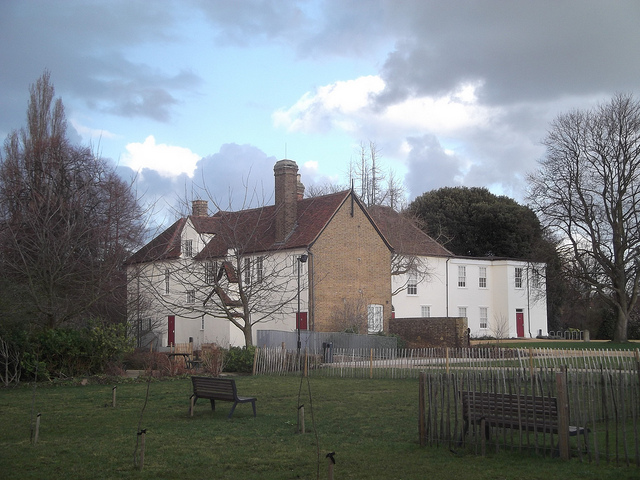
A manor in a housing estate


By Carole Barclay

FOR SOMEONE who grew up in Dagenham, Valence House has always had a special place in my heart and is a reminder of a rural Dagenham long since forgotten. It is the only manor house left in the borough and within its walls are relics and mementoes from Roman days right up to the 21st century.
Some parts of the house date back around 700 years and it was most recently a working farm run by the May family until it was compulsorily purchased in 1921 to make way for the building of what was to become the largest council estate in Europe.
The museum opened its doors to the public in 1937 and was initially just a small collection of finds run by the local library and open only a few afternoons a month, while the rest of the house was used for public meetings and local exhibitions. Two major renovations, including a major revamp in 2007 financed partly by a Heritage Lottery grant have transformed it into one of finest local museums in Greater London.
People settled the area during the Stone Age and the display of their tools and other flint implements is the path through which visitors wend their way through the building. Finds include the “Dagenham Idol” – a Neolithic wooden totem unearthed during sewage works in 1922. A scattering of  finds testifies to the impact of four centuries of Roman rule, while Saxon and medieval Dagenham is well represented in the history of nearby Barking Abbey and the local manor houses which were all swept away when the great Becontree council estate was built to provide “homes fit for heroes” after the First World War.
            In the 20th century Dagenham was virtually synonymous with the Ford motor company, which until recently provided employment for a large number of workers. It was also known for the Dagenham Girl Pipers, a bagpipe marching band set up by an eccentric Congregational church minister in the 1930s that continues to entertain people to this day. You can see them in the small museum cinema that screens a rotating series of films created by the Dagenham Cooperative Film Society, which highlight life on the Becontree Estate.
            The nearby Valence Park, a fragment of the original estate, contains a children’s playground while the museum grounds boast a beautiful herb garden that also includes a restored Anderson air-raid shelter from the Second World War as well as a bookshop, café and archive collection for students and scholars of all ages.  Valence House, like many estates in Essex, was moated and the building is still surrounded by most of the ancient water course, a haven for ducks and the local Becmain Angling Club!
            Valence House is not the easiest to find if you don’t know your way around the estate so take a map with you. The nearest stations are Chadwell Heath and Dagenham Heathway but they are both a 20 minutes walk away from the park. Admission is free and the museum is open daily from 10am to 4pm, apart from Sundays at: 

Valence House Museum
Becontree Avenue
Dagenham RM8 3HT
Phone: 020 8227 5293 or 2034.


Saturday, April 27, 2013

US imperialism and the facts behind the Korean crisis


by Neil Harris

South Korean military provocations directed at the Democratic People’s Republic of Korea are a regular event and usually increase during the annual spring military manoeuvres, conducted jointly with the United States. This year has been different, both in the ferocity of the southern rhetoric and the way in which it has been backed up by American nuclear threats.
On the 18th March, Pentagon press secretary George Little told reporters that on 8th March B-52 bombers from Andersen Air Force Base, Guam had flown to south Korea to simulate a nuclear attack on the DPRK during war games known as Exercise Foal Eagle.
In a co-ordinated statement the same day, US Deputy Defence secretary Ashton Carter confirmed during his visit to south Korea observing the military exercises, that the B-52 flights are part of the US Pacific Command programme called “Continuous Bomber Presence”. Little said: “We will continue to fly these training missions as part of our ongoing actions to enhance our strategic posture in the Asia-Pacific region.”
Confirming the B52’s nuclear role he continued: “The Foal Eagle manoeuvres will highlight both the nuclear and conventional capabilities of the B-52s.” He then stated that further flights would happen the next day.
He didn’t have that much choice, as earlier in the month two Russian military aircraft identified as TU-95 “bears”, were seen circling Guam, no doubt observing preparations for the nuclear element of the exercises which began in early March as part of the “Key Resolve” manoeuvres. A second round of exercises known as Foal Eagle will continue until the end of April.
Carter then confirmed that despite “The Pivot”, the Obama administration’s shift of military priorities away from the Middle East and towards confronting China and Russia in the Pacific Rim, their occupation of the southern “Republic of Korea” (ROK) would continue: “The Asia-Pacific rebalance is a priority. It’s a historic priority. We have the resources to accomplish it and no matter what happens in the budget debates that go on in the United States, our commitment to the Asia-Pacific rebalance and our commitment to the United States-ROK Alliance will remain firm.”
The American posturing was further ramped up by the south Korean newspaper, JoongAng Ilbo on the 13th March when it quoted an unnamed “senior government official”: “we need to have a nuclear weapon near the Korean Peninsula”. The official continued; “Among various options — our own development, adoption of tactical nuclear weapons and utilising the US nuclear umbrella — the third is the most realistic.”
The official didn’t specify where the nuclear weapons were and gave the false impression that the US puppets in the south had some control over the matter: “By not withdrawing US weapons participating in the Korea-US military exercises, we decided to let them stay a while and see what happens in North Korea,” he said. It looks likely that an American submarine armed with nuclear warheads will now be stationed nearby: “We decided to convene another Korea-US submarine drill after the Foal Eagle training ends at the end of April,” the official stated. “We are still negotiating, how to utilize the nuclear weapons after then.”
The negotiations are going to be one-sided; America’s new anti-Chinese military priorities mean that troops and bases are on the move. This has meant that US bases in the south are being consolidated and moved away from the front line, the south is being forced to pay more for its occupation.

Up till now, American tactical battlefield nuclear weapons have been stationed in the south but strategic weapons, intended for cities and civilians were not. America is cynically using the threat of a nuclear attack on the north as a way of appeasing the south while it changes its strategic priorities towards a confrontation with China. For China and Russia, the mobilisation of strategic nuclear weapons in the Pacific is a new and worrying threat.