Global warming and the energy crisis is now an issue of very serious concern around the world. Even many imperialists are worried enough to search round for answers – as long as those answers leave their profits intact!
Science journalist ALFRED BROWNE has studied the question intensively and has produced a number of thought provoking, and perhaps controversial, articles from a left perspective. He returns to the subject in this first part of a two part series.
THERE is no denying it; the 20th century brought great improvements in the standards of life of the ordinary people of Britain. They did not come without struggle, battles between bosses and workers, strikes and strike breaking, with the gains by the workers less than those of the bosses, the rich growing proportionately ever richer; nevertheless those improvements took place.
Go back that century, to Edwardian times when it was still the boast that the British empire was the greatest the world had known, drawing in tribute from near a quarter of the globe. Writing of living conditions in York, by no means a poor town, the economist Seebohm Rowntree reported the diet of a quarter of the population and 40 per cent of children fell below the nutritional standards necessary for mere physical health.
To feed properly the four children of the then normal family, he reported, a manual worker must never spend a penny on bus or rail fare, go to a concert, buy a book, sweets or toys for those children, must not smoke or drink, subscribe to a trade union or club, church or chapel, above all, must never lose a day’s work.
A labourer, even with regular employment, could only hope to feed two children. True poverty came three times for the typical member of the working class, in childhood, until brothers or sisters began to earn, after marriage, while children were too young to work, and in old age.
How different today when motor cars are parked along the kerbsides of working class streets, even those surviving from Edwardian slums, when electricity and the gadgets it powers free housewives from domestic toils, boosting family earnings to finance exotic holidays beyond the imaginings of even the better off Edwardians. It is enough to make one delude oneself into thinking the world may have been made for the comfort and well-being of humanity. Or is that a delusion?
After all Christians and Hebrews can point to chapter one of Genesis to show that is so and followers of other religions have similar authorities. Even secular, scientific atheists seem, nowadays, to accept such a basis for the good life, even if they replace God by human technology.
In fact, there is no mystery about from where come all these good things of the Western World. They come from previously untapped sources of energy, oil and natural gas, finite in amount but now being used with unthinking profligacy. That delusion of the previous paragraph is likely soon to turn to disillusion.
For all civilisation’s wealth comes from the energy available to it. In the earliest of civilisations, when agriculture replaced the hunter-gatherer way of life, that was still the muscle power of its members, or, rather, those members who produced the goods needed for the sustenance of all. But not all were producers.
Some administered – the chieftains, politicians, call them what you will - others preached the word of God, to be, jointly, the self-appointed guardians of the bodies and souls of the producers, joining in, of course, to consume the products of the workers. It is a system which has lasted long. Then, as now, extra energy was required to keep up production, to yield, in Marxist terms, surplus value. That came from slaves, humans taken captive in the wars to which mankind, by its nature, greedy and quarrelsome, is addicted.
Then came the enslavement of more powerful animals, horses, cattle, even elephants. Now muscle power has been replaced by that oil and gas, but all depended and still depends on our planet’s single source of energy, sunlight.
What our planet does is to provide the materials in which solar energy is fixed, the fixation being done by the primary form of life, plants. Fundamental among those materials are water (H2O) and that much deplored so-called pollutant of today, carbon dioxide (CO2 ). Not only do plants produce the essential ingredients for animal life, carbohydrates for energy, proteins for body-building, they also produce the oxygen we need to make use of that food.
The basic process, photosynthesis, the making of life material from light, is shown in the equation, CO2 + 2H2O + E (energy) = CH2O + O2 + H2O. Electrons are stripped from the basic components to provide the chemical energy locked in carbohydrate (CH2O). In practice things, and the carbohydrate, are more complex. The basic medium of animal energy, glucose, is a larger molecule (C6H12O6), as are the sugars, sucrose and fructose. However, animals do not live by energy foods alone.
Nor do plants. As every gardener knows plants have to be supplied with other natural elements than carbon dioxide and water from our planet’s soil and not just the N, P, K, nitrogen or ammonia, phosphate and potassium, of National Growmore fertiliser. Iron, magnesium, manganese, copper, chlorine must all be available in substantial amounts with further trace elements. With that raw material plants provide all living creatures with amino acids, proteins, enzymes and the nucleic acids, DNA and RNA. They also make their own chlorophyll, the green substance on which photosynthesis and all life depends.
Animals exist by virtue of the energy they obtain by eating plants, or other animals which feed on plants. The human is an animal with the mark of all animals, a hole in the head and another in the bottom connected by the digestive tract which converts the eaten matter into a form usable by the animal body.
Not completely, though, what comes out still retains some energy, nutritional value. Humankind also differs from other animals in that we lack the insulating materials, fur, feathers, fat, to survive easily in the normal ambient temperature, something which led to the discovery of fire, fuelled at first, of course, also by plant material but also by that product of animal digestion, animal dung, as it still is in some parts of the human world. It is that inability of animals, as consumers, to keep up with plants as producers, the inefficiency of animal intestines and other mechanisms of decay to extract all energy from plant remains and the remains of other animals used as food that has resulted, over millions of years in the presence of fossil fuel, oil, gas and coal with its locked in solar energy of the past on which our civilisation now primarily depends.
Modern industrial civilisation started with coal and the steam engine and we may think coal came first but much of the world knew of oil before it knew of coal. It seeps from the ground in the Middle East and other places as liquid or appears in a solid form as asphalt, used in the early civilisations there for lighting and building.
Around Baku, on the Caspian Sea, it seeped in particularly large amounts, with its associated gas, and was often set ablaze by lightning strikes. In 1272 Marco Polo, on his way to China, was astonished when he passed through Baku to find people coming from large distances to collect oil to burn in lamps to light their homes, when lamplight was a luxury unknown to the then primitive people of Western Europe. On arrival in China he found it being used there.
Slowly awareness of this strange substance seeping from the ground seeped into the minds of Westerners looking for a good thing to exploit. In 1828 a Christian missionary brought news from China of the drilling techniques there, using hollow bamboo canes and reaching down, so it is claimed, to 3000 feet. In America a group of businessmen backed a self-styled colonel, former railway conductor, Edwin Drake, to drill for oil at a seepage site in Oil Creek, Pennsylvania.
When his drill had gone down 69 feet without finding anything they decided to order him to stop. By the time their letter arrived on August 29, 1859, all had changed, oil had been struck the day before and the first oil rush to fortune had begun. Fortunes were made, but not by Drake, who died penniless in 1880. That oilfield soon ran dry but operations shifted to Texas and soon the US and Russia were oil suppliers to the world, helped, by the invention of the internal combustion engine.
That Baku oil field had been exploited by two Norwegian brothers named Nobel who used the dynamite invented by their brother, Alfred, of Nobel Prize fame, to blast a way for a pipeline through the Caucasus Mountains. Middle Eastern finds, first, a strike at Kirkuk in Iraq in 1927 so large that a river of oil ran from it and by an even larger strike, in Saudi Arabia in 1948 in what proved to be the world’s largest oil field, have transformed things.
How did the oil arrive? It had been a long journey. The formation of all present oilfields appears to have begun over a lengthy period of around 150 million years starting around 250 million years ago with their development going on ever since. It begins in hot, humid areas of intense plant life: rain forest, mangrove swamps and continental shelves, in what then were the tropics. The process depends on the nature of rocks. They start as cooled molten material from within the Earth’s surface, mostly solid like granite and basalt, impermeable by liquids. Erosion by water and wind reforms some into sedimentary rocks, such as sandstone, permeable by liquids and gases. Layers of different rocks become forcibly distorted and broken by pressure and tilt, reaching down into the Earth. Buried plants are first transformed by microbial action into a more liquid substance called kerogen.
Under the force of gravity it starts to migrate deeper into the Earth’s crust through permeable rocks. As it does so it meets increasing pressure and temperature, a rise of lo Centigrade for each 70 ft of depth, and water, carrying bacteria and other reactants. As a result it reforms into an immense variety of different hydrocarbons, containing, by mass, 82 to 87 per cent carbon and 12 to 15 per cent hydrogen, an indication of the relative proportions of energy contributed by the two elements. Eventually the crude may become trapped in one permeable rock between two impermeable rocks, so becoming an oil field to be tapped for human use.
The process reached its peak somewhat over 100 million years ago as recent ideas in geology, continental shift and plate tectonics, explain. That oil forming period was when there was one supercontinent, with the tropics moving around it and the climate was hotter and more humid because of the lack of land with permanent ice at the poles. Also the atmosphere was much richer in carbon dioxide, by the entire vast amount to be released as modern civilisation consumes the oil and gas on which it depends.
Towards the end of the oil forming period a shallow sea, the Tethys, breaking into the remaining supercontinent, Gondwana, swept up vast amounts of organic matter depositing them around the current Persian Gulf. In a mere 30 million years it had formed roughly half the oil ever produced, the present Middle Eastern oilfields.
How much survives for our civilisation’s use and how long will it last? In its first century, up to around 1960, the oil industry produced 200 billion barrels, around an eighth of what is thought to be the original total available. It then settled down to producing a similar amount every decade. Even if production were to be stabilised at the levels of the end of the 20th century, helped by increased fuel efficiency, shortages should begin to force a production decline by 2035. That makes little if any allowance for any increased consumer demand by the populations of China, India and other developing countries.
The Middle East has the most easily exploited reserves. Saudi Arabia, the US and Russia each had roughly similar original endowments with a rather larger one spread through the other Middle Eastern countries of Iraq, Iran and Kuwait. The United States had already used up over half its original endowment by 1999. Increasingly it seems future supplies will depend on Russian reserves.
There is that other easily exploited hydrocarbon resource, natural gas. The formation of crude oil goes on down to depths of 16,000 feet. Below 16,000 ft the temperature and pressure are too high for normal oil to form and existing oil can be turned into gas, principally methane. Natural gas is found dissolved in crude oil, associated gas, or on its own, unassociated. Vast quantities, put at 14 per cent of total world supplies, were lost in the early days of oil drilling, as associated gas was flared off. Again the main supplies are in the Middle East and Russia. The US had already used up half of all it possessed by the end of the twentieth century.
The largest gas fields are in Siberia. Urengoy, by far the world’s largest, is connected by a 5,470 km pipeline, five feet in diameter, crossing the Ural Mountains and 700 rivers and streams, taking supplies to Eastern Europe and then on to Western Europe which looks likely to become dependent on it. Reserves should suffice for some decades to come though extra calls on it as oil gets used up could mean it will last little if any longer.
So, because of that profligacy with which modern civilised humanity is expending it, the energy resource on which our civilisation depends will come to an end within the lifetime of many now living. What happens then? In an earlier article I suggested the universe renews itself by transformation between matter and energy. That means it must be cyclical in nature. Life is part of that process of transformation. Is it also cyclical?
Can it be that the human function, distinguishing humankind from all other living creatures, is to bring one cycle to its end? Instead of the world being for our comfort and well-being, as so many assume, are we to be the agents of its extinction—though that may be just the start of another, similar cycle? Humanity, greedy and quarrelsome, is addicted to war.
The 20th century saw humanity in an almost continual state of warfare somewhere or another and the 21st has followed suit, on the excuse in Iraq that it was necessary to prevent the development of weapons of mass destruction. Those weapons do exist, in quantities which would bring about true mass destruction of our present world, in just two countries: America, the symbol of that profligacy with which we are destroying the energy source of our civilisation, and Russia where its greatest reserves still remain.
The political prospects of an H-bomb war terrified millions in the 20th century but did not materialise. The fear may now be less but the economics of the present century makes the prospect of threat becoming reality even more likely.
Some will say this is just a hypothesis, that I have not dealt with the proposals for other means of energising our civilisation, have ignored the problem solving power of human technology. In a further article I will discuss these matters and possible political means of escaping the fate which, I suggest, now looms before us.
Thursday, January 18, 2007
Review: Revolutionary Democracy
Review
by Ray Jones
Revolutionary Democracy, vol XII, no 2, September 2006. £3 plus 50p P&P from NCP Lit, PO Box 73, London SW11 2PQ. Cheques to New Worker.
AS USUAL Revolutionary Democracy has a broad selection of interesting articles.
Rajesh Tyagi argues forcibly for the essential role of the armed peasantry and workers in the Nepalese revolution in the context of making a sophisticated analysis of the present political situation in Nepal.
Yuri Yemelianov’s review of Yuri Zhukov’s book A Different Stalin is an interesting look into five important years of the Stalin period.
In his article on The Shanghai Political Economy Text Book, Rafael Martinez presents a critique of Chinese political economy in some depth which is well worth reading – although it’s not easy going.
Grover Furr’s brief note makes a telling point about communism and anti-Semitism.
There are often fascinating historical documents in this journal and this issue includes the record of discussions between Stalin and members of the Communist Party of India in February 1951. Stalin gives his advice on the stages of the prospective Indian revolution and the handling of its contradictions. While doing so he also gives a neat definition of terrorism.
by Ray Jones
Revolutionary Democracy, vol XII, no 2, September 2006. £3 plus 50p P&P from NCP Lit, PO Box 73, London SW11 2PQ. Cheques to New Worker.
AS USUAL Revolutionary Democracy has a broad selection of interesting articles.
Rajesh Tyagi argues forcibly for the essential role of the armed peasantry and workers in the Nepalese revolution in the context of making a sophisticated analysis of the present political situation in Nepal.
Yuri Yemelianov’s review of Yuri Zhukov’s book A Different Stalin is an interesting look into five important years of the Stalin period.
In his article on The Shanghai Political Economy Text Book, Rafael Martinez presents a critique of Chinese political economy in some depth which is well worth reading – although it’s not easy going.
Grover Furr’s brief note makes a telling point about communism and anti-Semitism.
There are often fascinating historical documents in this journal and this issue includes the record of discussions between Stalin and members of the Communist Party of India in February 1951. Stalin gives his advice on the stages of the prospective Indian revolution and the handling of its contradictions. While doing so he also gives a neat definition of terrorism.

Monday, January 01, 2007
Toussaint L'Ouverture
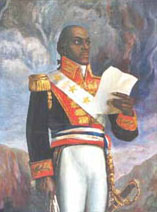
by Caroline Colebrook
TOUSSAINT L’Ouverture was born as a slave in the 18th century on theCaribbean island St Dominique, also known as Hispaniola, who led the people in a long and complex struggle for emancipation from slavery and from colonial rule.
Their struggles took place against a background of contending colonial powers: France, Britain, Spain and the newly independent United States. Vast fortunes were being made from the production of sugar, coffee and other commodities in the slave plantations of the Caribbean.
Toussaint was a self-educated man who challenged the idealists and intellectuals of the French revolution to extend the principles of Liberté, egalité and fraternité to the black slaves of France’s colonies. He was also a military genius who took on and defeated the armies of the colonial powers, including Napoleon.
Napoleon did not forgive him and tricked him with a false peace treaty to come to France, where he was seized and thrown into prison where he died of starvation and neglect. But his legacy lived on. He had proved to the world that black people are just as capable as white people of being great intellectuals, military leaders and political tacticians.
Today the island of Hispaniola is divided into the Dominican Republic and Haiti – the first autonomous black state in the western hemisphere.
He was born Toussaint Bréda at some time around 1743 on All Saints Day(either 20th May or 1st November) hence the name Toussaint; the name Bréda came from his owner. He later acquired the name L’Ouverture, meaning one who finds an opening.
Toussaint’s father, Gaou-Guinou, was born a free man in Africa. He isbelieved to have been from the Arrada people of the Dahomey coast but was brought by slave traders to St Dominique and sold to the Count de Bréda.
De Bréda was relatively humane and happy to encourage Toussaint to learn to read and write. He became a coachman of the count and was already a notedhorse rider and herbalist before his subsequent military and political career. A free black priest, Pierre Baptiste, taught him to read.
Toussaint married a woman named Suzan Simone and they had a son, named Placide.
Though it was not widely known during his lifetime, Toussaint was in fact afree man by the time of the great slave uprising he would eventually help lead. He was freed from slavery at about the age of 33, and colonial records show that he leased a field of about 15 hectares with 13 slaves to grow coffee.
As a young man he engrossed himself in the works of the French philosophers whose ideas helped to spark the French Revolution. But he also read a great deal about military tactics and became an admirer of Julius Caesar in this respect.
In 1789 the French Revolution rocked France and its colonies. The sugar plantations of St Dominique, though far away, would never be the same. Spurred on by such Enlightenment thinkers as Jean-Jacques Rousseau, the early revolutionaries considered seriously the question of slavery. Those revolutionaries were not willing to end slavery but they did apply the Rights of Man, as proclaimed by Thomas Paine, to all Frenchmen, including free blacks and mulattoes (those of mixed race). Plantation owners in the colonies were furious and fought the measure. Finally the revolutionaries gave in and retracted the measure in 1791.
The news of this betrayal triggered mass slave revolts in St Dominique,under the leadership of Georges Biassou. Toussaint joined their ranks as a medic. But first he took pains to see that his former master’s family were able to leave St Dominique safely. Toussaint’s knowledge of strategic and tactical planning and leadership abilities quickly brought him to prominence. He became an aide to Biassou after the Night of Fire.
Le Cap fell to French republican forces, who were reinforced by thousands of blacks in April 1793. Black forces had joined the French against the royalists on the promise of freedom. Indeed, in August Commissioner Léger-Félicité Sonthonax abolished slavery in the colony.
Two black leaders, Jean-François and Biassou, had little confidence in the French Republic and preferred to commit their allegiance to a king. So they accepted commissions from Spain. The Spanish deployed forces in coordination with these indigenous blacks to take the north of St Dominique.
Toussaint, who had taken up the Spanish banner in February 1793, came to command his own forces independently of Biassou’s army. By the year’s end,Toussaint had cut a swath through the north, had swung south to Gonaïves,and effectively controlled north-central St Dominique. It was at this time he acquired the nickname L’Ouverture (opening) because he exploited openings in the defences of the opposition.
Some historians believe that Spain and Britain had reached an informal arrangement to divide the French colony between them – Britain to take the south and Spain the north. British forces landed at Jérémie and Môle St Nicholas (the Môle). They besieged Port-au-Prince (or Port Républicain, as it was known under the Republic) and took it in June 1794.
The Spanish had launched a two-pronged offensive from the east. French forces checked Spanish progress toward Port-au-Prince in the south, but theSpanish pushed rapidly through the north, most of which they occupied by1794. Spain and Britain were poised to seize St Dominique, but severalfactors foiled their grand design.
One factor was illness. The British in particular fell victim to tropical disease, which thinned their ranks far more quickly than combat against theFrench. Southern forces led by Rigaud and northern forces led by another mulatto commander, Villatte, also forestalled a complete victory by the foreign forces. These uncertain conditions positioned Toussaint’s centrallylocated forces as the key to victory or defeat.
On 6th May 1794, Toussaint made a crucial decision, influenced by events inFrance. The Republic was now in the hands of the Jacobins, led by Maximilian Robespierre, who did honour the principles of Liberté, egalité and fraternité; they abolished slavery on 4th February 1794.
The Spanish had promised emancipation but they showed no signs of keeping their word in the territories that they controlled, and the British had reinstated slavery in the areas they occupied. Toussaint’s priority was emancipation so he had no choice but to cast his lot with the French.
In several raids against his former allies, Toussaint took the Artibonite region and retired briefly to Mirebalais. Toussaintproved to be a brilliant general, winning seven battles in seven days. As Rigaud’s forces achieved more limited success in the south, the tide clearlyswung in favour of the French Republicans.
A major turning point at this point was the 22nd July 1794 peace agreement between France and Spain. The agreement was not finalised until the signing of the Treaty of Basel the following year. The accord directed Spain to cedeits holdings on Hispaniola to France. The move effectively denied supplies,funding, and avenues of retreat to combatants under the Spanish aegis.
The armies of Jean-François and Biassou disbanded, and many flocked to the standard of Toussaint, the remaining black commander of stature.
In March 1796, Toussaint rescued the French commander, General Etienne-Maynard Laveaux, from a mulatto-led effort to depose him as the primary colonial authority. To express his gratitude, Laveaux appointed Toussaint lieutenant governor of St Dominique.
Toussaint used this position to increase his power within his homeland. He distrusted the intentions of all foreign parties – as well as those of the mulattoes – regarding the future of slavery; he believed that only black leadership could assure the continuation of an autonomous St Dominique. Heset out to consolidate his political and military positions, and he undercutthe positions of the French and the rebel mulattoes.
A new group of French commissioners appointed Toussaint Général de Division (commander in chief of all French forces on the island). From this positionof strength, he resolved to move quickly and decisively to establish an autonomous state under black rule. He expelled Sonthonax, the leading French commissioner and concluded an agreement to end hostilities with Britain.
Toussaint tried to secure allegiance of the mulatto leader André Rigaud andthus to incorporate the majority of mulattoes into his national project, but his plan was thwarted by the French, who saw in Rigaud their last opportunity to retain dominion over the colony.
There followed a clash, sometimes referred to as the War of the Castes, between Toussaint’s predominantly black forces and Rigaud’s mulatto army.The contending colonial powers were engaged in intrigue and manipulation on both sides of the conflict. Toussaint, in correspondence with United States president John Adams, pledged that in exchange for support he would deny theFrench the use of St Dominique as a base for operations in North America.Adams, the leader of an independent, but still insecure, United States, found the arrangement desirable and dispatched arms and ships that greatly aided black forces. Later President Thomas Jefferson reversed the friendly American policy.
Rigaud’s army and ambitions were crushed and he fled the island in late1800. Toussaint secured the port of Santo Domingo in May 1800, Toussaint held sway over the whole of Hispaniola. This position gave him anopportunity to concentrate on restoring domestic order and productivity.
He realised that the survival of the island depended on an export-orientedeconomy. He therefore re-introduced the plantation system, employing paid labourers rather than slaves to produce the sugar, coffee, and other commodities needed to support economic progress.
A constitution, approved in 1801 by the then still surviving ColonialAssembly, granted Toussaint, as Governor-general-for-life, all effective power as well as the privilege of choosing his successor.
But this period of autonomous black rule was brief. Toussaint had always distrusted France and his de facto independence and autonomy rankled withthe French leaders and concerned the governments of slave-holding nations, such as Britain and the United States.
When Napoleon Bonaparte came to power in France, he began to work withcolonists to return France’s Caribbean territories to their earlier profitability as plantation colonies. Moreover, Bonaparte regarded St Dominique as essential to potential French exploitation of the Louisiana Territory. Taking advantage of a temporary halt in the wars in Europe,Bonaparte dispatched to St Dominique forces led by his brother-in-law,General Charles Victor Emmanuel Leclerc.
Leclerc denied that he was trying to reinstate slavery. He landed inJanuary 1802 with between 16,000 and 20,000 troops aided by white colonists and some mulattos – about the same size as Toussaint’s army – at severalpoints on the north coast.
Over the following months, Toussaint’s troops fought against the French but two of his officers, Dessalines and Christophe, defected to join Leclerc. On7th May 1802, Toussaint signed a treaty with the French in Cap-Haïtien, on condition that there was no return to slavery, and retired to his farm in Ennery.
But Leclerc sent troops to seize Toussaint and his family, shipping them to France on board a warship. They arrived in France on 2nd July. On 25th August 25, 1802, Toussaint was imprisoned in the castle Fort-de-Joux in Doubs. He died of pneumonia while imprisoned.
But the struggle did not end there. The betrayal of Toussaint and Bonaparte’s restoration of slavery in Martinique undermined the collaboration of leaders such as Dessalines, Christophe, and Pétion.Convinced that the same fate lay in store for St Dominique, these commanders and others once again battled Leclerc and his disease-riddled army. Leclerc himself died of yellow fever in November 1802, about two months after he hadrequested reinforcements to quash the renewed resistance.
Leclerc’s replacement, General Donatien Rochambeau, waged a bloody campaign against the insurgents, but events beyond the shores of St Dominique doomedthe campaign to failure.
Dessalines led a successful campaign against Rochambeau in what proved tobe a very bloody war of attrition.
By 1803 war had resumed between France and Britain, and Bonaparte once again concentrated his energies on the struggle in Europe. In April of thatyear, Bonaparte signed a treaty that allowed the purchase of Louisiana bythe United States and ended French ambitions in the western hemisphere.
Rochambeau’s reinforcements and supplies never arrived in sufficient numbers. The general fled to Jamaica in November 1803, where he surrenderedto British authorities rather than face the retribution of the rebel leadership. The era of French colonial rule in Haiti had ended.
The success of Dessalines had an impact throughout the slave-owningCaribbean islands and in the southern states of the US. Believing themselvesto be kind and paternal and the slaves to be child-like and grateful, white slave owners suddenly became aware of the tinderbox that they were sittingon. Although slave owners would publicly declare that slaves were, in fact, happy being slaves, in reality they knew otherwise.
All throughout the southern United States, white slave owners began to build “slave shelters” to hide in, should the slaves revolt. Many of them regularly occupied these shelters whenever they feared a slave revolt. Guns became bedside companions and fear became the rule of the day.
The successful Haitian revolution had an impact around the world. In Britain the poet Wordsworth – at that time a political progressive – wrote a poem about L’Ouverture. Many songs and stories have been written in hishonour and a Hollywood film is currently in production.
The history of Haiti since then has been mixed, with imperialist powers using economic pressure to recolonise it. This had led to serious povertyand hardship for most of the population. But the people continue to resist US imperialist interference and the imposition of puppet rulers.
Tuesday, November 21, 2006
The meaning of 1917

COMMUNISTS and progressives all over the world commemorated the 89th anniversary of the Russian Revolution last week in meetings and ceremonies to mark the turning point in the history of the working class. In the socialist countries of Asia, on the island of Cuba, in eastern Europe and the former Soviet republics communists pause from their work to recall the achievements of the Soviet Union that was born from the torch lit on 7th November 1917.
Though the Soviet Union is no more, the roar of the guns that triggered the popular uprising that swept the Bolsheviks to power echoes across the planet today. In People’s China, Democratic Korea, Vietnam, Laos and Cuba the masses are taking their own roads to socialism, while throughout the Third World progressive forces have taken a socialist perspective to achieve liberation, independence and social justice.
In the imperialist world we remember the sacrifice of Soviet youth who smashed the Nazi legions in the Second World War and saved the world, and in the Third World comrades and friends rallied to pay tribute to the immense Soviet contribution to the national liberation movement in breaking the chains of colonial slavery.
At the same time we must look to the challenge of today and the promise of tomorrow. Communists are united with the progressive movements of Latin America that have brought about sweeping changes for the benefit of working people and indigenous populations across their continent. In Britain and the United States communists are marching side-by-side with the millions in the anti-war movements mobilised against the war in Iraq.
When the counter-revolutionaries who had wormed their way to the top of the Soviet leadership destroyed the USSR, the imperialists rejoiced and told us that communism was finished. They said Marx and Engels were wrong. Their paid scribes claimed that “history was dead” and that from now on and forever more the entire planet would be governed by the exploiters. Their intellectual lackeys told us to expect a new era of common prosperity funded by a “peace dividend” with the end of the Cold War and a “new world order” that would solve the problems of the planet.
What we got was imperialist wars for resources and land and an anti-working class offensive aimed at stripping working people of the gains won through struggle during the last century.
Though the pundits who fill the media with bourgeois lies every day ignore 1917, they cannot ignore the spectre of communism. Lenin and Stalin are reviled by these errand boys of imperialism as much now as when they were alive. While these champions of exploitation and oppression bang the drum of “human rights” to accompany a barrage of lies against all the remaining socialist countries they say nothing about the real oppression and squalor that exists in the world – all entirely due to the merciless exploitation of workers and peasants by the economic system created by the capitalists, industrialists and landowners to ensure that they continue to live out their parasitical lives of ease and pleasure.
The lesson of the Great October Russian Revolution is that working people can take destiny into their own hands and end the era of exploitation. The Soviet peoples under the leadership of the Bolsheviks proved that you can build socialism in one state and create a social system far superior to the decadent, corrupt and oppressive capitalist world. Above all it showed that when the chains of exploitation are broken and the energy of working people is released you can reach for the stars.
Thursday, November 02, 2006
SUEZ: When Nasser stood up against imperialism!

by Andy Brooks
ON 29th October 1956, Israeli troops stormed into the Egyptian-controlled Gaza Strip and Sinai Peninsula and advanced towards the Suez Canal. The Israelis claimed it was aimed at curbing Egyptian support for Palestinian guerrillas based in Gaza.
In fact it was part of a secret deal hatched in London and Paris to topple Egypt’s Free Officer Revolution led by Gamal Abdel Nasser and return the recently nationalised Suez Canal to Franco-British imperialism.
The next day, Britain and France offered to temporarily occupy the Canal Zone to protect the international waterway, demanding a 10 mile buffer-zone on either side and entirely on Egyptian territory, to separate the warring forces. When this unacceptable ultimatum was rejected by Nasser the RAF began bombing Egyptian air-fields and Anglo-French paratroopers descended on the Canal. The second Arab-Israeli war had begun.
The old colonialists dreamt of restoring their power in the Middle East. The Egyptians dreamed of building a new modern Arab republic in the heart of the Arab world. While the Arab dream remains unfulfilled to this day the colonial pretensions of British and French imperialism were shattered in October 1956.
The 1952 Egyptian Revolution, led by progressive army officers, ended a corrupt and venal monarchy that had long been in the pocket of imperialism. The Free Officers immediately introduced land reforms, public education and a rudimentary welfare state.
But above all they were determined to fulfill the centuries-old dream of all the people of Egypt – the construction of a dam that would conserve the waters of the Nile for agriculture and use its power to generate electricity for the people of the great river.
British engineers had already built one dam across the Nile at Aswan in 1899 but it had become woefully inadequate and almost overflowed in 1946. Plans for a new High Dam at Aswan began in 1952 and the Nasser government had been led to expect funding to come from loans from the United States and Britain. But in 1956 Britain and the United States both cancelled their offer.
British imperialism, like the French, was angered at the Egyptian government’s embrace of Arab nationalism which had inspired democratic movements that challenged the Arab kings and princes under British protection in Jordan, Iraq and the Persian Gulf. Cairo was the base for the Algerian national liberation movement fighting to kick the French out while the Americans had been stung by Egypt’s decision to import arms from socialist Czechoslovakia and establish diplomatic relations with People’s China.
This left Nasser with only two choices. Give in to imperialism or find the money elsewhere. He did – by nationalising the Anglo-French Suez Canal Company.
No one had asked the Egyptian people whether they wanted the canal in the first place though 120,000 Egyptian workers, mainly forced labourers, had perished during its construction. Egypt’s feudal rulers originally held shares in the French company but Ismail Pasha was forced to sell all of Egypt’s stakeholding to Britain in 1875 to meet external debts. The canal then came under total Anglo-French control.
Opened in 1869, the charges levied on shipping made a handsome profit for its owners but the Egyptians got little back in return. The Suez Canal Company had effectively robbed the Egyptian people of £35 million a year, Nasser said in his fateful address on 26th July 1956 in Alexandria. This money, just like the canal, belonged to the people.
Anglo-French imperialism immediately tried to bring the Canal to a standstill. All British and French pilots were ordered out but the Egyptian and Greek pilots stayed at their posts. Then Britain and France tried to build up an international lobby to challenge the nationalisation while secretly plotting with Israel and moving troops to the region in preparation for the invasion.
On 31st October Anglo-French warplanes began to bomb Egypt. Nasser ordered the sinking of all 40 ships present in the Canal to block it to all Powers.
Significantly the Eisenhower administration in Washington had not been consulted nor had it given its blessing to the Anglo-French invasion. American imperialism had no interest in maintaining the old European colonial empires and indeed they were actively working to dismantle them to open the Third World to US competition.
Their major Arab ally was the feudal king of Saudi Arabia who was threatening an oil embargo on Britain and France if the war continued and the United States still hoped to win Nasser over to their plan to extend Nato into the Middle East.
At the United Nations on 2nd November the American delegation voted in favour of a General Assembly resolution, moved there to sidestep a British or French veto, calling for an immediate ceasefire and the withdrawal of the invading troops In Britain Labour opposition leader Hugh Gaitskell had initially backed the efforts of Tory premier, Sir Anthony Eden, to regain control of the Canal. But a growing peace campaign and pressure from union leaders and the rank-and-file soon changed his mind. On Sunday 4th November Trafalgar Square was packed with demonstrators chanting:‘One, two, three, four! We won’t fight in Eden’s war’ and Gaitskell forcefully attacked Eden’s aggression.
Britain and France ignored the UN ceasefire vote and on 5th November Anglo-French paras were dropped along the Canal. Egyptian forces, already fighting the Israelis, were deployed to defend the waterway. The French and British commandos faced fierce resistance in the streets of the Canal ports. The Egyptian masses rallied to defend their revolution and drive the invaders out. Pro-Nasser demonstrations swept the streets of the Arab world, still largely controlled by Anglo-French imperialism.
Oil pipelines were sabotaged and French and British property attacked by angry crowds. In Cyprus, the key British base for the invasion, General Grivas’ EOKA guerrillas – also fighting British colonialism – attacked the RAF bases and throughout the non-aligned world the tripartite aggression was denounced.
The Soviet Union moved quickly the day the paras landed. Failing to receive a positive response from President Eisenhower to a proposal for joint action to repulse the aggressors, the Soviet Union then demanded an immediate halt to all military operations. The Soviet government stated that the USSR was “determined to use force to shatter the aggression and to restore peace in the Middle East”. It obliquely threatened to launch missile attacks on Paris and London while Krushchov warned that he would send Soviet volunteers to join the fighting Egyptians.
The next day, 6th November, the British Cabinet met in crisis session. Seven ministers in Eden’s government threatened to resign. Eden visibly shaken, told a news conference he was going on hunger strike. When Jawaharlal Nehru, the Indian Prime Minister, received the news, he interrupted a meeting in the Indian parliament to read it out, and said that an empty stomach was better than an empty head.
On 7th November Britain, France and Israel agreed to a ceasefire. By the end of the year all British and French troops had left and Israel evacuated Sinai and the Gaza Strip the following year with the end of the Egyptian blockade of the Israeli Red Sea port of Eilat and the establishment of UN buffer troops in the Gaza Strip and along the Egyptian-Israeli frontier. Eden retired soon after, a broken man, while Nasser became a hero to all the Arabs. And the Aswan High Dam was built with Soviet assistance in the 1960s.
In a speech in 1960 President Nasser said: “The true significance of Suez for the liberation movement in Asia and Africa was that it signified an end to the era when the imperialists could mobilise their armies and navies to deal lethal blows to liberation movements. The Suez war proved that the victim of aggression had its own armies and that freedom had supporters all over the world”.
Thursday, October 12, 2006
The Battle of Cable Street

The Battle of Cable Street and the failure of fascism in Britain
by Daphne Liddle
ON THE 4th October 1936 thousands of working class people in London’s East End, led by the Communist Party of Great Britain and the Independent Labour Party rose early from their beds to occupy four key places along the route of a planned march by Sir Oswald Mosley and his British Union of Fascist Blackshirts in order to block its path. Throughout the day they stood firm in spite of mounted police baton charges, numerous arrests.
By noon Gardiner’s Corner was impassable due to the number of anti-fascist demonstrators. Police tried to clear a route through Leman Street – but this was blocked by a tram, deliberately abandoned by its driver.
Police tried to reroute the march through Cable Street. Anti-fascist demonstrators, the vast majority local residents, blocked Cable Street with barricades in three different places. Police fought their way through one barricade, only to be confronted by the second. Eventually the police gave up and ordered Mosley to abandon his march. They escorted him to the Embankment where his followers dispersed.
This was a humiliating defeat for Mosley and eventually led to a cutting off of vital funds from his main financial sponsor, the Italian dictator Benito Mussolini.
The Battle of Cable Street marked a significant turning point and the end of any prospects of fascism becoming a truly mass movement in Britain as it had done in some other European countries.
Mosley’s BUF was not the first fascist movement in Britain. That was the Imperial Fascist League, founded by Arnold Leese, a former army camel vetinary who had served in India and the Middle East. This tiny group modelled itself on Mussolini’s fascist movement but, unlike Mussolini at that time, Leese was virulently anti-Semitic. He claimed this sprang from his vetinary objections to kosher animal slaughter practices.
He was further influences by the notorious forgery, The Protocols of the Learned Elders of Zion – the same work that influenced the young Hitler.
Mosley began his political career by being elected Conservative MP for Harrow in 1918 at the age of 23. He soon found party discipline irksome and left the party to become first an Independent Conservative and then simply an Independent. In April 1924 he joined the Labour Party, five months after it had formed a minority government supported by the Liberals.
By 1925 Mosley was proposing a new economic policy based on the theories of John Maynard Keynes, whom he had consulted in drawing up his version of social credit policy. Mosley proposed the nationalisation of the banking system and a system of social credits to the unemployed to stimulate demand.
When Labour lost the October 1924 general election to the Tories, as a backbench MP he accused the Government of wishing to be fascist but not having the courage.
In May 1930 he resigned from Ramsay MacDonald’s Labour government after it failed to adopt his economic policies and took with him a number of other Labour (or rather Independent Labour) members, including John Strachey, Dr Robert Forgan, W J Brown, Oliver Baldwin and his first wife, Cynthia Mosley, to form the New Party.
The New Party tried to make a populist appeal to the unemployed as an alternative to the young Communist Party of Great Britain. But it failed to attract a mass following. Then Mosley visited Mussolini in Italy and was very impressed; he decided to form a Union of Fascists based on the New Party’s youth movement. He drafted a new programme, the Greater Britain and aimed to win fascist power in Britain.
One obstacle to making fascism popular in Britain is that it is a particularly nationalistic cult and in the 1930s was already identified firmly with Italian and German nationalism. So Mosley tried to prove that fascism also had British roots and tried to construct a British tradition of fascism. For this he seized upon the Ulster Volunteer Force, an organisation led by Sir Edward Carson in the north of Ireland in the earlier part of the 20th century implacably opposed to home rule for Ireland.
In 1914 Prime Minister Lloyd George had passed a Home Rule Bill through Parliament, giving Ireland its freedom. But Carson staged a rebellion in Ulster. The army was ordered to deal with this rebellion but the officers mutinied – the British aristocrat class fully supported Carson – and Parliament was forced to back down. Lenin at the time pointed out that this was an indicator of the true nature of class power in Britain.
Mosley gave the job to one of his lieutenants, W E D Allen, former Tory MP for Belfast West to mould the legacy of Carson and the paramilitary UVF to fit a fascist perspective. Ever since, the fascist extreme right-wing in Britain has had strong links with Protestant paramilitaries in the occupied six counties of Ireland.
For Mosley himself this led to a strangely two-faced position as he had in the past backed a united Ireland and had links with the Blueshirt Irish nationalists. One of the advantages of fascism as an “ideology” is that it does not have to adhere to rationalism or consistency – “faith”, strong emotions and “leadership qualities” are given priority.
Mosley’s vision of a fascist Britain included an Enabling Act to free the Government from parliamentary control while it introduced the new economic policy. Parliament would no longer have the right to dismiss a Government through a vote of censure. Parliament would be elected on an occupational franchise rather than on geographical constituencies and its role would be purely advisory; the Commons would advise on political and economic matters while the Lords would advise on moral and religious matters.
Once every five years there would be a referendum and the population would be allowed to endorse the Government. If the people voted against it, the monarch would summon new ministers who, in his opinion, would be likely to win support in a fresh vote.
Parallel to this would be an apparently self-governing industrial structure, a “corporate state” comprising employers, tame trade unions and consumer groups. Each corporation – governing a whole sector of the economy – would determine its own policies on wages, prices and conditions.
His promises of full employment did attract some working class support in those areas worst hit: the depressed textile industries of Lancashire, Leeds and London’s East End. But even in these places the fascists never gained a majority and were tainted by the anti-Semitic reputation of international fascism.
Mosley was not originally anti-Semitic but did not discourage it among his members when they attacked Jews. He was a great opportunist, seeking financial support from European fascists who were very anti-Semitic. When Jews and communists united to fight back, Mosley’s movement became very anti-Semitic.
Arnold Leese, resentful that Mosley had stolen so many of his potential followers, was scornful of Mosley’s insincere anti-Semitism and labelled him a “Kosher fascist”.
Mosley sought but did not find support from Britain’s industrialists but did not admit this in public. Historian Robert Benewick wrote: “Among those rumoured to have contributed generously were Sir William Morris, Lord Inchcape, Sir Henry Deterling, Watney’s Brewery and the Imperial Tobacco Company. These rumours were, for the most part, without foundation.” Some had backed the New Party before Mosley turned it fascist.
Mosley did get some support from a section of the British aristocracy, particularly the friends and relations of his second wife, Diana Mitford and from the Cliveden Set, who toyed with the idea of supporting Hitler. Left-wing journalist Clive Cockburn, editor of The Week, certainly regarded the Cliveden Set as a pro-Nazi conspiratorial group. They did manage to spread some confusion among the German and British governments. Diana Mitford/Mosley and her sister Unity possibly gave Hitler a false impression that the British aristocracy would support him.
The BUF did gain some support in the London area, including a handful of intellectuals such as William Joyce, Raven Thompson and A K Chesterton, plus an assortment of disenchanted petty bourgeoisie and workers. But it never gained enough support from any class to say that it in anyway represented the outlook of that class.
The opportunism of the BUF, in allowing itself to be seen as anything that a potential recruit mighty want it to be, in order to maximise membership, lead to confusion and divisions and eventually more members were leaving than joining. Some who joined were obvious cranks and eccentrics, and their presence discouraged others.
Mosley did have one powerful supporter in the shape of newspaper baron Lord Rothermere, owner of the Daily Mail, the Sunday Dispatch and the London Evening News. Rothermere used his papers to promote fascism, which he seemed to interpret as a sort of armed Conservatism. He did not share the fascists’ anti-Semitism nor their stated opposition to international finance capital.
Rothermere backed off from supporting Mosley as Hitler’s fascism became more notorious, especially after the “Night of the Long Knives”. Rothermere was also disconcerted by the violence associated with Mosley’s mass rallies in Olympia in the early 1930s.
This violence attracted a diversity of recruits who saw in fascism the embodiment of their own frustrated causes but who did not help the movement except in terms of recruitment statistics. Benewick wrote: “In 1933 and 1934, particularly during Lord Rothermere’s boost the BUF had taken hold like wildfire and had drawn to itself every unstable person and adventurer of either sex that the town.”
The BUF did provoke a great deal of opposition, which was mobilised by the CPGB – at the same time that volunteers were being recruited for the International Brigade to fight in the anti-fascist war in Spain. These twin struggles against fascism at home and abroad helped to strengthen and shape the CPGB. Membership doubled between 1935 and 37.
Following the seventh Comintern conference of 1935, the CPGB aimed to build a broad Popular Front against fascism based on Dimitrov’s analysis of fascism and the best way to combat it.
The Labour Party’s attitude to fascism was to hope that it would disappear naturally if ignored. The leadership felt that strong opposition to fascism only drew attention to it and encouraged. So they did not support the Popular Front as a party. But many individual members did support it.
The first large open air fascist rally in London’s East End happened on 7th June 1936. The fascists claimed that 100,000 had attended but press estimates varied from 3,000 to 50,000. Among them were 500 uniformed Blackshirts. The rally provoked a hostile crowd of local residents which was attacked by police. It ended in a free-for-all of hand-to-hand fighting.
In mid-July the East London Trades Council organised an anti-fascist march and rally in Victoria Park, with Labour MP Herbert Morrison to speak along with Sylvia Pankhurst. Fascists attacked the march, throwing stones as well as bags of flour and soot.
The East End became engulfed in a frenzy of political activity, with meetings every night – for and against the fascists. The Home Office recorded police attendance at 536 meetings in August, 603 in September and 647 in October. Nearly 300 extra police a day were drafted into the area.
In Parliament Herbert Morrison described how the Jews in the area felt under this pressure: “I say, and I am sure the whole House will agree, that in this country we are not prepared to tolerate any form of Jew-baiting.
“We are not in the least disposed to look with an indulgent eye on any form of persecution. It is therefore necessary that public attention should be drawn to this danger.”
Subsequently Mosley wrote in protest to the Home Secretary, Sir John Simpson, claiming that Jews were now the only people in Britain immune from attack! He argued that it was illegal to incite others to violence but felt he had as much right to attack Jews on their conduct in Great Britain as the Labour Party had the right to attack capitalists.
This was the background to the Battle of Cable Street. The BUF planned to assemble in Royal Mint Street near Tower Bridge and then march in four columns to meetings in Shoreditch, Limehouse, Bow and Bethnal Green. Mosley planned to address all four meetings. Various Labour local authority and Jewish groups had tried to get the march banned in vain. The Labour leadership and its papers, the Daily Herald and News Chronicle advised all anti-fascists to stay away.
But the Communist Daily Worker called on people to come out, a previously planned rally in Trafalgar Square in support of Republican Spain was dropped, after pressure from Communist Party members living in the East End, and comrades were told to rally to defend the East End.
Benewick describes the scene: “On the morning of 4th October, the East End was transformed into an expectant Madrid. Red flags were draped from windows, and variations of the slogan ‘They shall not pass’ adorned walls throughout the district. Gangs of youths marched through the streets chanting ‘Mosley shall not pass’ and ‘Bar the road to fascism’.
“Members of the Jewish People’s Council distributed a handbill which ended, ‘This march must not take place’. Leaflets were distributed by the Communists calling for a demonstration at Aldgate. The Ex-Servicemen’s Movement Against Fascism distributed handbills calling on its supporters to parade. The national Unemployed Workers’ Movement boasted of a human barricade. The loudspeaker vans of the Communist Party and the Jewish ex-Servicemen’s Association echoed throughout the boroughs. Anti-fascist rallies were announced for 2pm at Cable Street and at 8pm at Shoreditch.”
Hundreds of thousands of people began to converge on the four places where the fascists had planned to meet.
Some 3,000 fascists assembled in Royal Mint Street at 2.30pm. Even at the starting point, police had to baton charge anti fascists to try to clear a way for the fascists.
Throughout the East End, anti-fascist crowds – mostly local residents – blocked the planned fascist routes at strategic points. The path from Leman Street to Commercial Street was blocked by an abandoned tram. When police tried to reroute the march through Cable Street, it was blocked by barricades at three points.
The anti-fascist crowds defied repeated mounted police baton charges. There were legends of one or two police officers trying to surrender to the crowd – much to their embarrassment. Eventually the police gave up and told Mosley he could not march that day.
There were subsequent fascist rallies and meetings but none so big again. On 3rd October 1937 Mosley – now banned from the East End – attempted a march through Bermondsey in south London which also met with implacable opposition from local anti-fascists.
The communists stepped up their work among the East End residents on all sorts of local issues but especially housing. They backed rent strikes against exorbitant rents rises and won many working class former Mosleyites away from fascism. Workers soon learned that in any dispute with landlords or bosses, the fascists would take sides against the workers and consequently their support declined dramatically.
Mussolini’s support for Mosley waned when he could not gain mastery of London’s streets. Mosley complained that this was due to Communist influence and underhand conspiracies – but that the local people really did support him. But in subsequent elections BUF support declined and Mussolini withdrew financial support from Mosley.
The BUF never recovered from Cable Street and the fascist movement was totally discredited during the Second World War when Mosley and a number of his followers were interned as potential fifth columnists.
After the war Mosley made several unsuccessful attempts to revive his movement under different names but his support was reduced to a small fringe of cranks and eccentrics. When racism reared its ugly head in Britain again in the 1970s neo-nazi parties like the National Front barely mentioned him.
Friday, September 08, 2006
Oliver Cromwell: knocked them about a bit
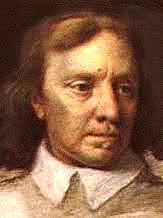
by Andy Brooks
OLIVER CROMWELL, the leader of the English Revolution, died on 3rd September 1658. He led the parliamentary forces to victory in the English Civil War which began in 1642 and ended with the trial and execution of the king, Charles Stuart, in 1649. He presided over the establishment of the Republic of England, or Commonwealth as it was styled in English and in 1653 he became head of state, or Lord Protector. Cromwell’s death was marked by genuine mourning throughout the country. His state funeral was the biggest London had ever seen. Two years later the Stuart royalty were back.
Today Cromwell’s death passes largely unnoticed apart from the annual ceremony organised by the Cromwell Association near the parliamentary leader’s statue in Westminster. Gone, but not quite forgotten.
Marie Lloyd, the Victorian musical hall queen, sang about “the ruins that Cromwell knocked about a bit”. Elvis Costello wrote Oliver’s Army, a sardonic song about the modern British Army in 1979, and a radical punk rock band took the name of Cromwell’s New Model Army for their own. The name of Cromwell is preserved in the streets of London. Countless books, articles and novels have been written about his life as well as two feature films and a number of television documentaries and every year enthusiasts re-enact the major battles of the civil war.
And the resonance of the English Revolution is heard on the streets today. The Quakers we meet on the peace demonstrations were founded by George Fox, whose pacifist beliefs were borne out of the violence of the revolution. Robert Owen, the founder of the Co-operative Movement, and William Morris, the Victorian socialist and artist, were both influenced by the writings of Gerrard Winstanley, the leader of the Diggers, the “True Levellers” whose attempt to establish co-operative farms in Surrey and other parts of the country were suppressed during the Commonwealth.
To the Irish, Cromwell is the tyrant who stamped the boot of England on Irish soil with a ferocity not seen again until the Easter Uprising of 1916. For romantic socialists Cromwell represents the well-to-do Puritan merchants and landowners who dominated the Army Council – the Grandees who crushed the Levellers and the rest of the democratic movement in the army.
an upstart?
Monarchists see Cromwell as an upstart general who made himself dictator through the might of his New Model Army. For some Protestants Cromwell is still a religious reformer who fought for freedom of conscience for all faiths apart from Catholicism. Many in the Jewish community still remember Cromwell as the leader who allowed Jews to live, worship and work in England for the first time since the pogroms of 1290. But for the bourgeoisie Oliver is best forgotten, even though their ascendancy began when their ancestors took up the gun in the 1640s.
The ruling class abhor revolutionary change today because it threatens their own domination so they naturally deny that their class ever came to power through it in the first place. For them the English republic is an aberration, a temporary blip in the steady advance of bourgeois progress which is the myth they teach us in school. If they elevate anything at all it is the “glorious revolution” of 1688 when the last of the Stuarts was deposed and replaced by a king of their own choosing. Though not as bloodless as they claimed – plenty was shed in Ireland – the establishment of a monarchy that was the gift of parliament was achieved without the involvement of the masses, which was precisely what was intended.
The problem was simply that the most advanced section of the bourgeoisie in the 17th century, the “Independent” faction led by Cromwell, was unable to maintain stability after the death of their most prominent leader. The real victors were those who styled themselves as English “Presbyterians” who fought the king not for a republic but for a “mixed monarchy” – an oligarchy still headed by a king who ruled through a parliament of the merchants, bankers and landowners and an established Church, like that in Scotland, that was free of the trappings of feudalism.
That’s what they thought they got when Charles II returned in 1660. When they realized their mistake William of Orange and his Dutch army were invited in to make sure it didn’t happen again.
But the torch of the English Revolution lit the fires that were to erupt a century later in the British colonies of North America and the flames quickly spread to France and ignited the French Revolution.
Cromwell was a reluctant republican who only embraced the views of the militant Levellers after the upsurge of renewed civil strife in 1648 due to Charles Stuart’s intrigues and double-dealing convinced him that there would never be peace as long as this “man of blood” lived.
Cromwell’s positive role, was recognised by Stalin who told the novelist H G Wells in 1934 that: “The Communists base themselves on rich historical experience which teaches that obsolete classes do not voluntarily abandon the stage of history. Recall the history of England in the 17th century. Did not many say that the old social system had decayed? But did it not, nevertheless, require a Cromwell to crush it by force?”
Though Cromwell abolished the established Church and guaranteed the right for all sects to pray as they saw fit, he was not a social reformer and thought the Leveller ideas absurd and dangerous. But basic bourgeois rights, particularly the absolute right to property and the end of feudal duties, were won during the English Revolution in a fight that involved masses of working people empowered for the first time in their lives.
In 1948 British communist leader Harry Pollitt said:
“When the growing capitalist class, the poor farmers and craftsmen, led by Oliver Cromwell, shattered the system of feudalism, and executed King Charles I in the process, reigning monarchs and ruling nobilities everywhere saw the pattern of future history unfolding. The name of Cromwell was reviled, then, as much as Stalin’s is today, by the ruling powers of the old and doomed order of society.
“The English Revolution is ‘great’, because it broke the barriers to man’s advance. It allowed the capitalist class to open the road leading to modern large-scale industry. It permitted science to serve the needs of the new, capitalist society. And, because of these developments, it provided the basis on which, for the first time, a new class, the working class, began to grow, to organise and itself to challenge the prevailing system of society.
“Capitalism, at first progressive, in so far as it led the way for technical advance, developed to the point limited by its own structure. It became, as feudalism was before it, a barrier to the further advance of man. It ceased to serve a useful purpose. It had built up enormous productive forces, but was incapable of providing the majority of the people with a decent standard of life.
“Throughout the world, the working class, with the Communist Party at its head, now goes forward to put an end to capitalism and to build socialism. The English Revolution set this train of historic events in motion. That is why our Party is proud to honour its memory.”
Friday, July 28, 2006
Solidarity with the Palestinian and Lebanese people
Joint statement by communist and workers’ parties
Solidarity with Palestinian and Lebanese people
We strongly condemn all aggressive acts by the Israeli army in Gaza and Lebanon with tragically consequences for the live of the Palestinian, Lebanese and Israeli people but also for people from other countries.
We reject and condemn the blames and threats by U.S and Israeli government addressed toward Syria and Iran and against other countries of the region. These threats reveal that the real aggressive and expansive force in the region is Israel.
We strongly protest the US policy which encourages the Israeli aggressiveness. We reject the hypocrisy shown by the G8 leaders and the “equal distance” policy pursued today by certain forces.
We are highly concerned about and warn of the great dangers for a general spread of the crisis in the Middle East, for a new civil war and for a massive imperialist intervention in Lebanon under the pretext of “peace building measures”.
The bombings against Lebanon follow the fierce offensive in the Gaza Strip, the kidnapping of Palestinian political figures, the attempt to eliminate the Palestinian National Authority, to destroy the infrastructure and to sink the Palestinian society into a state of chaos.
The raids in Gaza and Lebanon constitute new steps of the “Greater Middle East” US and NATO policy which is directed against the legitimate rights of the peoples, the popular resistance, the progressive and peace loving forces.
The Israeli government, the only military nuclear power in the region, demonstratively ignores UN Security Council resolutions, violates agreements with the Palestinian Liberation Organization, undermines the agreements by the Palestinian organizations regarding the creation of an independent Palestinian state alongside Israel, and rejects the ceasefire proposals. It is also in violation of the Fourth Geneva Convention, an international law that prohibits collective punishment, “targeted” assassinations, and destruction of the infrastructure of an occupied territory.
We call upon all peace loving forces to strengthen their solidarity with the Palestinian and Lebanese peoples, with the progressive forces fighting for peace in Israel and to intensify the struggle for a political solution based on:
The immediate cessation of the attacks and withdrawal of the Israeli army.
The respect of national sovereignty and territorial integrity against any imperialist intervention under any pretext.
The immediate release of the political prisoners.
The complete dismantling of the settlements and withdrawal of the Israeli army from the territories occupied in 1967, the establishment of a Palestinian state (Gaza Strip and the West Bank) with its capital in East Jerusalem, alongside Israel. The solution of the refugee question. The return of all Palestinian refugees should be based on the resolution of UN General Assembly No. 194 and according also to the other UN resolutions.
Only pulling out Israeli soldiers from Gaza and Lebanon and a just and viable peace would put an end to the bloodshed and guarantee the security for all peoples of the Middle East.
20 July 2006
The parties:
1. Communist Party of Albania
2. Communist Party of Argentina
3. Communist Party of Australia
4. Communist Party of Bangladesh
5. Communist Party of Belarus
6. Workers' Party of Belgium
7. Communist Party of Brazil
8. Communist Party of Britain
9. New Communist Party of Britain
10. Workers' Communist Party of Bosnia and Herzegovina
11. Communist Party of Bulgaria
12. Party of Bulgarian Communists (former Bulgarian Communist Party “Georgi Dimitrov”)
13. Communist Party of Canada
14. Communist Party of Chile
15. Communist Party of Cuba
16. Communist Party of Bohemia & Moravia
17. AKEL, Cyprus
18. Communist Party in Denmark
19. Communist Party of Denmark
20. Communist Party of Equador
21. Communist Party of Egypt
22. Communist Party of Estonia
23. Communist Party of Finland
24. Communist Party of Macedonia
25. Unified Communist Party of Georgia
26. German Communist Party
27. Communist Party of Greece
28. Hungarian Communist Workers' Party
29. Communist Party of India
30. Tudeh Party of Iran
31. Communist Party of Ireland
32. Workers’ Party of Ireland
33. Communist Party of Israel
34. Party of the Italian Communists
35. Jordanian Communist Party
36. Socialist Party of Latvia
37. Lebanese Communist Party
38. Socialist Party of Lithuania
39. Communist Party of Luxembourg
40. Communist Party of Malta
41. Party of the Communists, Mexico
42. Popular Socialist Party of Mexico
43. New Communist Party of the Netherlands
44. Communist Party of Norway
45. Palestinian People’s Party
46. Party of the People of Panama
47. Paraguayan Communist Party
48. Peruan Communist Party
49. Phillipine Communist Party (PKP-1930)
50. Communist Party of Poland
51. Portuguese Communist Party
52. Communist Party of Romania
53. Socialist Alliance Party, Romania
54. Communist Party of the Russian Federation
55. Communist Party of the Soviet Union
56. Russian Communist Working Party – Russian Party of Communists
57. New Communist Party of Yugoslavia
58. Communist Party of Slovakia
59. Communist Party of the Peoples of Spain
60. Communist Party of Spain
61. Sudanese Communist Party
62. Syrian Communist Party
63. Syrian Communist Party
64. Communist Party of Turkey
65. The Party of Labour, EMEP, Turkey
66. Communist Party of the Ukraine
67. Union of Communists of Ukraine
68. Communist Party, USA
69. Communist Party of Venezuela
Other endorsements
Solidarity with Palestinian and Lebanese people
We strongly condemn all aggressive acts by the Israeli army in Gaza and Lebanon with tragically consequences for the live of the Palestinian, Lebanese and Israeli people but also for people from other countries.
We reject and condemn the blames and threats by U.S and Israeli government addressed toward Syria and Iran and against other countries of the region. These threats reveal that the real aggressive and expansive force in the region is Israel.
We strongly protest the US policy which encourages the Israeli aggressiveness. We reject the hypocrisy shown by the G8 leaders and the “equal distance” policy pursued today by certain forces.
We are highly concerned about and warn of the great dangers for a general spread of the crisis in the Middle East, for a new civil war and for a massive imperialist intervention in Lebanon under the pretext of “peace building measures”.
The bombings against Lebanon follow the fierce offensive in the Gaza Strip, the kidnapping of Palestinian political figures, the attempt to eliminate the Palestinian National Authority, to destroy the infrastructure and to sink the Palestinian society into a state of chaos.
The raids in Gaza and Lebanon constitute new steps of the “Greater Middle East” US and NATO policy which is directed against the legitimate rights of the peoples, the popular resistance, the progressive and peace loving forces.
The Israeli government, the only military nuclear power in the region, demonstratively ignores UN Security Council resolutions, violates agreements with the Palestinian Liberation Organization, undermines the agreements by the Palestinian organizations regarding the creation of an independent Palestinian state alongside Israel, and rejects the ceasefire proposals. It is also in violation of the Fourth Geneva Convention, an international law that prohibits collective punishment, “targeted” assassinations, and destruction of the infrastructure of an occupied territory.
We call upon all peace loving forces to strengthen their solidarity with the Palestinian and Lebanese peoples, with the progressive forces fighting for peace in Israel and to intensify the struggle for a political solution based on:
The immediate cessation of the attacks and withdrawal of the Israeli army.
The respect of national sovereignty and territorial integrity against any imperialist intervention under any pretext.
The immediate release of the political prisoners.
The complete dismantling of the settlements and withdrawal of the Israeli army from the territories occupied in 1967, the establishment of a Palestinian state (Gaza Strip and the West Bank) with its capital in East Jerusalem, alongside Israel. The solution of the refugee question. The return of all Palestinian refugees should be based on the resolution of UN General Assembly No. 194 and according also to the other UN resolutions.
Only pulling out Israeli soldiers from Gaza and Lebanon and a just and viable peace would put an end to the bloodshed and guarantee the security for all peoples of the Middle East.
20 July 2006
The parties:
1. Communist Party of Albania
2. Communist Party of Argentina
3. Communist Party of Australia
4. Communist Party of Bangladesh
5. Communist Party of Belarus
6. Workers' Party of Belgium
7. Communist Party of Brazil
8. Communist Party of Britain
9. New Communist Party of Britain
10. Workers' Communist Party of Bosnia and Herzegovina
11. Communist Party of Bulgaria
12. Party of Bulgarian Communists (former Bulgarian Communist Party “Georgi Dimitrov”)
13. Communist Party of Canada
14. Communist Party of Chile
15. Communist Party of Cuba
16. Communist Party of Bohemia & Moravia
17. AKEL, Cyprus
18. Communist Party in Denmark
19. Communist Party of Denmark
20. Communist Party of Equador
21. Communist Party of Egypt
22. Communist Party of Estonia
23. Communist Party of Finland
24. Communist Party of Macedonia
25. Unified Communist Party of Georgia
26. German Communist Party
27. Communist Party of Greece
28. Hungarian Communist Workers' Party
29. Communist Party of India
30. Tudeh Party of Iran
31. Communist Party of Ireland
32. Workers’ Party of Ireland
33. Communist Party of Israel
34. Party of the Italian Communists
35. Jordanian Communist Party
36. Socialist Party of Latvia
37. Lebanese Communist Party
38. Socialist Party of Lithuania
39. Communist Party of Luxembourg
40. Communist Party of Malta
41. Party of the Communists, Mexico
42. Popular Socialist Party of Mexico
43. New Communist Party of the Netherlands
44. Communist Party of Norway
45. Palestinian People’s Party
46. Party of the People of Panama
47. Paraguayan Communist Party
48. Peruan Communist Party
49. Phillipine Communist Party (PKP-1930)
50. Communist Party of Poland
51. Portuguese Communist Party
52. Communist Party of Romania
53. Socialist Alliance Party, Romania
54. Communist Party of the Russian Federation
55. Communist Party of the Soviet Union
56. Russian Communist Working Party – Russian Party of Communists
57. New Communist Party of Yugoslavia
58. Communist Party of Slovakia
59. Communist Party of the Peoples of Spain
60. Communist Party of Spain
61. Sudanese Communist Party
62. Syrian Communist Party
63. Syrian Communist Party
64. Communist Party of Turkey
65. The Party of Labour, EMEP, Turkey
66. Communist Party of the Ukraine
67. Union of Communists of Ukraine
68. Communist Party, USA
69. Communist Party of Venezuela
Other endorsements
Party of Popular Vanguard of Costa Rica
Peoples Liberation Front in Sri Lanka (JVP)
Communist Party, Sweden
Wednesday, July 05, 2006
PCS Conference June 2006
PCS stands firm
by an observer
PUBLIC and Commercial Services (PCS) union members gathered in Brighton inJune for group and annual conference to take stock of the work done inresisting the sweeping attack on their pay, pensions and conditions by theGovernment that is their main employer.
The majority of civil service workers are organised by PCS, an amalgamation,whose final form took shape in 1998, consisting of four major civil serviceunions whose divisions and traditions are mirrored in the highly factional politics of the union today.
Though the new union was originally dominated by right-wing blocs the left won sweeping victories in 2003. Annual conference was restored and the reactionary heart of the rule book torn out and democratic controls restored. Membership confidence in the new leadership has continued underthe leadership of general secretary Mark Serwotka and the Left Unity led “Democratic Alliance” bloc.
This was confirmed in this year’s national elections. The right wing was left with just one seat on the new executive and the left held its vote inmost of the groups. But there were no grounds for complacency. Overall the turn-out in the group and national elections was down on last year –significantly in the giant Department of Work and Pensions (DWP) which has faced the brunt of the Government’s offensive. Though over half the workers have walked out repeatedly in protest stoppages against the cut, just over a tenth bothered to vote in the DWP group elections.
The right-wing’s problem is that they regard themselves as New Labour “Brownites” but the Chancellor is the architect and chief advocate in the campaign to cut the work-force by 100,000 across the board. The left bloc is dominated by former Militant Tendency supporters now in the Socialist Party and the Scottish Socialist Party and a galaxy of Trotskyist, revisionist and social-democratic groupings within and outside the Labour Party. It’s an uneasy alliance and the divisions were reflected on the debates on pay,pensions and the cuts.
General secretary Mark Serwotka stressed the need for the restoration ofnational pay bargaining. In his key-note address opening main conference hecalled on Government to take responsibility for its policies, rather than engaging in crude scapegoating.
“The scapegoating by the Government of hard working civil servants who are battered by job cuts and bruised by privatisation is nothing short of passing the buck,” he said. “This attack, combined with the latest blamegame in the Home Office, botched privatisations and failing private sector IT contracts, is leading to a wave of discontent emerging across the civilservice, which even the Tories are trying to capitalise on.”
Mark told delegates that the Government should remember that PCS members were low paid people; half the civil service earn less than £20,000 per year and retire on an average pension of £4,500 and he praised the 100,000 PCS members who had taken strike action this year in defence of jobs, pay and conditions, as he moved the annual report.
Some of the left factions were critical of the tactics in DWP and the pension settlement reached this year, which preserved the civil servant’s existing rights but accepted the Government’s changes for new entrants. This clearly wasn’t the view of the leadership. PCS President Janice Godrich told conference that the union’s achievements over the last year were a cause for celebration.
“We are bigger, better known and even more well respected,” she declared.“Members have stood together and we have secured some important concessions including a Government back-down on our members’ pension retirement age.”
Guest speakers included Labour MP John McDonnell, who chairs the PCS parliamentary group and is the leader of the Labour Representation Committeeas well as Dave Prentis, the general secretary of Unison.
McDonnell denounced the Government’s offensive against civil servants which he said reflected an “abiding and deep-seated prejudice” and the“belligerent prejudice of the bar-room bully and the Sun editorial”. And he slated the Blair/Brown Labour leadership for its attacks on civil and public servants and said it was “surreal” that Tory leader David Cameron was now apparently the “defender” of the public sector. But he pointed out thatCameron had supported every single Tory policy and statement attacking thepublic sector.
Prentis, whose local government members are also under the Government’scosh, warned the Blair government that public sector workers “will take action to defend our members facing cuts and privatisation”.
On the fringe the biggest turn-out at around 200 was undoubtedly for Tony Benn at a Stop the War Coalition meeting but almost as many went to hear George Galloway MP speak against the Iraq war at the Respect rally. Meetings in support of the Venezuelan revolution and in solidarity with Cuba were well attended as well as those called by the unions many pressure groups and factions.
The debates in the conference hall reflected the trends within the union and ultimately the decisions, like the elections, were overall a vote of confidence in the left-led leadership while the fringe meetings, probably the largest number seen so far, mirrored what is going on throughout the peace and labour movement.
by an observer
PUBLIC and Commercial Services (PCS) union members gathered in Brighton inJune for group and annual conference to take stock of the work done inresisting the sweeping attack on their pay, pensions and conditions by theGovernment that is their main employer.
The majority of civil service workers are organised by PCS, an amalgamation,whose final form took shape in 1998, consisting of four major civil serviceunions whose divisions and traditions are mirrored in the highly factional politics of the union today.
Though the new union was originally dominated by right-wing blocs the left won sweeping victories in 2003. Annual conference was restored and the reactionary heart of the rule book torn out and democratic controls restored. Membership confidence in the new leadership has continued underthe leadership of general secretary Mark Serwotka and the Left Unity led “Democratic Alliance” bloc.
This was confirmed in this year’s national elections. The right wing was left with just one seat on the new executive and the left held its vote inmost of the groups. But there were no grounds for complacency. Overall the turn-out in the group and national elections was down on last year –significantly in the giant Department of Work and Pensions (DWP) which has faced the brunt of the Government’s offensive. Though over half the workers have walked out repeatedly in protest stoppages against the cut, just over a tenth bothered to vote in the DWP group elections.
The right-wing’s problem is that they regard themselves as New Labour “Brownites” but the Chancellor is the architect and chief advocate in the campaign to cut the work-force by 100,000 across the board. The left bloc is dominated by former Militant Tendency supporters now in the Socialist Party and the Scottish Socialist Party and a galaxy of Trotskyist, revisionist and social-democratic groupings within and outside the Labour Party. It’s an uneasy alliance and the divisions were reflected on the debates on pay,pensions and the cuts.
General secretary Mark Serwotka stressed the need for the restoration ofnational pay bargaining. In his key-note address opening main conference hecalled on Government to take responsibility for its policies, rather than engaging in crude scapegoating.
“The scapegoating by the Government of hard working civil servants who are battered by job cuts and bruised by privatisation is nothing short of passing the buck,” he said. “This attack, combined with the latest blamegame in the Home Office, botched privatisations and failing private sector IT contracts, is leading to a wave of discontent emerging across the civilservice, which even the Tories are trying to capitalise on.”
Mark told delegates that the Government should remember that PCS members were low paid people; half the civil service earn less than £20,000 per year and retire on an average pension of £4,500 and he praised the 100,000 PCS members who had taken strike action this year in defence of jobs, pay and conditions, as he moved the annual report.
Some of the left factions were critical of the tactics in DWP and the pension settlement reached this year, which preserved the civil servant’s existing rights but accepted the Government’s changes for new entrants. This clearly wasn’t the view of the leadership. PCS President Janice Godrich told conference that the union’s achievements over the last year were a cause for celebration.
“We are bigger, better known and even more well respected,” she declared.“Members have stood together and we have secured some important concessions including a Government back-down on our members’ pension retirement age.”
Guest speakers included Labour MP John McDonnell, who chairs the PCS parliamentary group and is the leader of the Labour Representation Committeeas well as Dave Prentis, the general secretary of Unison.
McDonnell denounced the Government’s offensive against civil servants which he said reflected an “abiding and deep-seated prejudice” and the“belligerent prejudice of the bar-room bully and the Sun editorial”. And he slated the Blair/Brown Labour leadership for its attacks on civil and public servants and said it was “surreal” that Tory leader David Cameron was now apparently the “defender” of the public sector. But he pointed out thatCameron had supported every single Tory policy and statement attacking thepublic sector.
Prentis, whose local government members are also under the Government’scosh, warned the Blair government that public sector workers “will take action to defend our members facing cuts and privatisation”.
On the fringe the biggest turn-out at around 200 was undoubtedly for Tony Benn at a Stop the War Coalition meeting but almost as many went to hear George Galloway MP speak against the Iraq war at the Respect rally. Meetings in support of the Venezuelan revolution and in solidarity with Cuba were well attended as well as those called by the unions many pressure groups and factions.
The debates in the conference hall reflected the trends within the union and ultimately the decisions, like the elections, were overall a vote of confidence in the left-led leadership while the fringe meetings, probably the largest number seen so far, mirrored what is going on throughout the peace and labour movement.
Unison Conference 2006
No more privatisation
by Mike Fletcher in Bournemouth
THE GIANT public sector union Unison last week, at its annual delegateconference in Bournemouth, voted against any further privatisation by theLabour government.
And an amendment to a composite resolution called for the renationalisationof all public services. The motion called for spending on the NHS to bemaintained above the European average.
It was moved by Greenwich Local Government branch and it said: “Conference condemns the thousands of jobs shed in the NHS, with 4,000 announced in March 2006 alone.”
Conference also called for backing of workers in the private contracthealth in Whipps Cross Hospital in east London, who were being balloted forstrike action over the failure to implement the Agenda for change – an equalopportunities programme – and against cuts in their hours and jobs.
Unison general secretary Dave Prentis said that Unison will be in theforefront to defend our NHS in conjunction with patients’ groups and community groups.
Conference deferred a motion opposing the union’s affiliation to the LabourParty and Unison will continue to give positive support to its link with Labour.
Veteran left-Labour statesman Tony Benn pointed out at a fringe meeting that all unions should affiliate to the Labour Party; with a forthcoming party leadership election the 40 per cent trade union vote would be criticalin the election of a new Labour leader.
Dave Prentis said: “Any final offer on pensions will be put to the membersfor a ballot for industrial action.”
Trade unions have a major role in sticking up for the rights of migrant workers, conference heard. The Government was urged to “shift the debate”away from discouraging immigration – and using inflammatory language thatleads to racism – to improving migrants’ working lives.
Migrant workers made “a valuable contribution to the economy and to ethnicand cultural diversity in our society,” said Pat Roland from Scotland.
“These workers do more than their share, fiscally, but that is not always reflected in government policies.”
Migrant workers, many of whom work in the health service, suffer from thelack of legal protection, leaving them exposed to unscrupulous employers, she said.
Low pay, long hours and appalling accommodation are just some of the ways in which they suffer.
Roland added that Unison in Scotland already had a number of initiatives,including the overseas nurses’ network and refugee learning project thatcould be replicated across Britain.
Delegates voted to challenge the government “to shift the debate aroundmigration to a focus on increasing the employment rights of migrant workers,rather than restricting their ability to work in the UK”.
The Government was also called on to clamp down on rogue operators whoflout employment regulations.
increase
The conference heard that there has been a 29 per cent increase in racistattacks in the last year. And Islamophobia is on the increase, both before 7th July 2005 and subsequently, with two-thirds of religious hate crimetargeted at Muslims.
This prejudice is fuelled by a “hysterical” right-wing media and plays intothe hands of the British National Party (BNP), said Hannah Priest of West Midlands.
“Witnesses are refusing or failing to attend court to give evidence against those who cause misery,” she explained, “because they are afraid ofreprisals against themselves or family.”
She added that the BNP is inciting racial hatred with leaflets saying people should “get even”.
“If we allow the BNP to grow in this country, oppression against freedom ofspeech and trade unions will increase.”
Ann McCormack from the North West region said: “We need to make members aware of the BNP’s vicious lies and politics. We need to get them off the councils where they already are and stop them getting any more seats.”Conference pledged the union to:
• work with Government to make it easier for witnesses to giveevidence and other appropriate bodies;
• get Unison branches to foster closer links with differentcommunities;
• challenge BNP attempts to exploit divisions in society;
• work with partner unions to challenge the misrepresentation of Islamand the portrayal of all Muslims as potential terrorists.
Dave Prentis congratulated Unison members in leading the fight againstfascism and the British National Party. Any member of the BNP will beexpelled from Unison.
Unison is opposed to the Government’s ID scheme and remains concerned aboutthe cost of the scheme and the impact on race relations and civil rights.
The scheme is expected to cost up to £19 billion, and charges are likely to impact most on the poor, especially those living in insecure accommodation who are expected to be charged for changes to the database every time theychange address.
“This is money better spent on public transport, improving patient care,protecting pensions, and public services,” said Ray Walker, moving the motion opposing the scheme.
Criticising the Government’s view that the scheme was necessary to protect security, Walker said: “There is nothing that shows that we would be safer than we are now.”
alarm
Delegates expressed alarm at the potential impact on race relations. Therewas concern that black and ethnic minority people would be targeted when trying to access public services, and would be subject to more frequent stopand search procedures.
“I’m proud to be a British Muslim, I don’t need an ID card to tell me I’m aBritish citizen,” said Medhi Hassan from Tower Hamlets.
The ID card was a form of state racism, he continued, “I will be stopped every day. I don’t think Tony Blair will ever be stopped. My skin colour isbrown, and his white – and that is the difference,” said Hassan to cheers from the hall.
Delegates also raised the issue of the security of personal data collected by the scheme, as the work is being contracted out to private companies.
Conference re-affirmed its opposition to the scheme and resolved tocampaign on both ID cards and for the Government to abandon the national information register scheme.
Conference also agreed to work with civil society organisations, such asLiberty and their “NO2ID” campaign. Branches were reminded that they could affiliate both to Liberty and their campaign.
The conference warned US president George Bush not to interfere with the revolution that is transforming the fortunes of Venezuela.
Delegates in Bournemouth signalled their support of President Hugo Chavez,who is presiding over social programmes aimed at improving education,health care, housing and jobs in his country.
But his pan-continental “Bolivarian revolution” is making the US governmentvery nervous about its dwindling power in the region.
“Hugo Chavez has won nine elections, and is working to do things differently,” said Bill King from Wales. “His policies are popular inVenezuela but not with the Bush administration.
“Bush believes that democracy is not any good unless it is his kind ofdemocracy,” King added. “We must show him that he has no right to interferewith the internal workings of another state.”
Conference heard of the “colossal advances” in Venezuela, which included amassive house-building project and the building of universities, schools andhospitals.
Chavez’s government is also encouraging trade unions and worker co-operatives. Jacobo Torres, a member of the Public Services Federation ofVenezuela’s National Union of Workers addressed a fringe meeting promotingthe revolution taking place in his country.
“We are not carrying out an International Monetary Fund agenda,” he said,“but a Bolivarian agenda, for the benefit of the Venezuelan people.
“We are building our own reference points, in our own rhythm.”
The conference was organised in a friendly atmosphere with delegates from all over the world expressing their need for solidarity against and Anglo-American global capitalism and its desire to exploit and privatise theworld.
by Mike Fletcher in Bournemouth
THE GIANT public sector union Unison last week, at its annual delegateconference in Bournemouth, voted against any further privatisation by theLabour government.
And an amendment to a composite resolution called for the renationalisationof all public services. The motion called for spending on the NHS to bemaintained above the European average.
It was moved by Greenwich Local Government branch and it said: “Conference condemns the thousands of jobs shed in the NHS, with 4,000 announced in March 2006 alone.”
Conference also called for backing of workers in the private contracthealth in Whipps Cross Hospital in east London, who were being balloted forstrike action over the failure to implement the Agenda for change – an equalopportunities programme – and against cuts in their hours and jobs.
Unison general secretary Dave Prentis said that Unison will be in theforefront to defend our NHS in conjunction with patients’ groups and community groups.
Conference deferred a motion opposing the union’s affiliation to the LabourParty and Unison will continue to give positive support to its link with Labour.
Veteran left-Labour statesman Tony Benn pointed out at a fringe meeting that all unions should affiliate to the Labour Party; with a forthcoming party leadership election the 40 per cent trade union vote would be criticalin the election of a new Labour leader.
Dave Prentis said: “Any final offer on pensions will be put to the membersfor a ballot for industrial action.”
Trade unions have a major role in sticking up for the rights of migrant workers, conference heard. The Government was urged to “shift the debate”away from discouraging immigration – and using inflammatory language thatleads to racism – to improving migrants’ working lives.
Migrant workers made “a valuable contribution to the economy and to ethnicand cultural diversity in our society,” said Pat Roland from Scotland.
“These workers do more than their share, fiscally, but that is not always reflected in government policies.”
Migrant workers, many of whom work in the health service, suffer from thelack of legal protection, leaving them exposed to unscrupulous employers, she said.
Low pay, long hours and appalling accommodation are just some of the ways in which they suffer.
Roland added that Unison in Scotland already had a number of initiatives,including the overseas nurses’ network and refugee learning project thatcould be replicated across Britain.
Delegates voted to challenge the government “to shift the debate aroundmigration to a focus on increasing the employment rights of migrant workers,rather than restricting their ability to work in the UK”.
The Government was also called on to clamp down on rogue operators whoflout employment regulations.
increase
The conference heard that there has been a 29 per cent increase in racistattacks in the last year. And Islamophobia is on the increase, both before 7th July 2005 and subsequently, with two-thirds of religious hate crimetargeted at Muslims.
This prejudice is fuelled by a “hysterical” right-wing media and plays intothe hands of the British National Party (BNP), said Hannah Priest of West Midlands.
“Witnesses are refusing or failing to attend court to give evidence against those who cause misery,” she explained, “because they are afraid ofreprisals against themselves or family.”
She added that the BNP is inciting racial hatred with leaflets saying people should “get even”.
“If we allow the BNP to grow in this country, oppression against freedom ofspeech and trade unions will increase.”
Ann McCormack from the North West region said: “We need to make members aware of the BNP’s vicious lies and politics. We need to get them off the councils where they already are and stop them getting any more seats.”Conference pledged the union to:
• work with Government to make it easier for witnesses to giveevidence and other appropriate bodies;
• get Unison branches to foster closer links with differentcommunities;
• challenge BNP attempts to exploit divisions in society;
• work with partner unions to challenge the misrepresentation of Islamand the portrayal of all Muslims as potential terrorists.
Dave Prentis congratulated Unison members in leading the fight againstfascism and the British National Party. Any member of the BNP will beexpelled from Unison.
Unison is opposed to the Government’s ID scheme and remains concerned aboutthe cost of the scheme and the impact on race relations and civil rights.
The scheme is expected to cost up to £19 billion, and charges are likely to impact most on the poor, especially those living in insecure accommodation who are expected to be charged for changes to the database every time theychange address.
“This is money better spent on public transport, improving patient care,protecting pensions, and public services,” said Ray Walker, moving the motion opposing the scheme.
Criticising the Government’s view that the scheme was necessary to protect security, Walker said: “There is nothing that shows that we would be safer than we are now.”
alarm
Delegates expressed alarm at the potential impact on race relations. Therewas concern that black and ethnic minority people would be targeted when trying to access public services, and would be subject to more frequent stopand search procedures.
“I’m proud to be a British Muslim, I don’t need an ID card to tell me I’m aBritish citizen,” said Medhi Hassan from Tower Hamlets.
The ID card was a form of state racism, he continued, “I will be stopped every day. I don’t think Tony Blair will ever be stopped. My skin colour isbrown, and his white – and that is the difference,” said Hassan to cheers from the hall.
Delegates also raised the issue of the security of personal data collected by the scheme, as the work is being contracted out to private companies.
Conference re-affirmed its opposition to the scheme and resolved tocampaign on both ID cards and for the Government to abandon the national information register scheme.
Conference also agreed to work with civil society organisations, such asLiberty and their “NO2ID” campaign. Branches were reminded that they could affiliate both to Liberty and their campaign.
The conference warned US president George Bush not to interfere with the revolution that is transforming the fortunes of Venezuela.
Delegates in Bournemouth signalled their support of President Hugo Chavez,who is presiding over social programmes aimed at improving education,health care, housing and jobs in his country.
But his pan-continental “Bolivarian revolution” is making the US governmentvery nervous about its dwindling power in the region.
“Hugo Chavez has won nine elections, and is working to do things differently,” said Bill King from Wales. “His policies are popular inVenezuela but not with the Bush administration.
“Bush believes that democracy is not any good unless it is his kind ofdemocracy,” King added. “We must show him that he has no right to interferewith the internal workings of another state.”
Conference heard of the “colossal advances” in Venezuela, which included amassive house-building project and the building of universities, schools andhospitals.
Chavez’s government is also encouraging trade unions and worker co-operatives. Jacobo Torres, a member of the Public Services Federation ofVenezuela’s National Union of Workers addressed a fringe meeting promotingthe revolution taking place in his country.
“We are not carrying out an International Monetary Fund agenda,” he said,“but a Bolivarian agenda, for the benefit of the Venezuelan people.
“We are building our own reference points, in our own rhythm.”
The conference was organised in a friendly atmosphere with delegates from all over the world expressing their need for solidarity against and Anglo-American global capitalism and its desire to exploit and privatise theworld.
The land beneath our feet
by Daphne Liddle
LAND is a basic necessity of human existence, along with water and air. Itis also a source of great wealth and power – simply because we all need it and the supply of it is finite. It is held as private property and boughtand sold but many economists do not regard it as a commodity, certainly it is not the usual sort of commodity.
This is because no labour is used to create it, so it does not embody inherent labour value. The useful things extracted from it like food andminerals do embody labour value but that labour has been expended inextracting these commodities from the land. The land retains its value after this because its chief value to us is that we need it to live on.
In the early days of the human race the concept of private property did not exist and land was freely available to all. In feudal times all land theoretically belonged to the crown. The monarch would parcel it out to various friends and allies in return for their loyalty in time of war and as“rent”. This rent could take the form of money, goods or service – usually amixture of these three. When a feudal lord died his lands reverted theoretically to the crown, unless the king agreed to recognise the lord’s heir – this was normally a formality, as was the payment of a fee that was essentially an inheritance tax.
The lords subdivided their lands and rented to lesser lords – again in return for loyalty in battle and rent. At the lowest level the peasants actually farmed the land in return for rent paid to the local lord of the manor. This rent again could take the form of goods – part of the crop – andor service rendered so many days a week working on the lord’s own patch.
But feudal land was not held as private property. It could not be boughtand sold. And the lords did have a duty to ensure their peasants had enoughland to provide a living for themselves (four acres and a cow was deemed thesubsistence level in mediaeval England) and to defend them from attack.The peasant was legally bound to the land and could not leave it, butequally his family could not be turfed off it.
But this system broke down in England after the Black Death plague wiped out a third of England’s peasants. The lords faced a huge labour shortage and soon they were bribing peasants from other estates to abscond and cometo work for them for high wages.
Many villages were totally devastated, leaving the land uncultivated. Itwas then that some lords discovered they could increase their wealth considerably by turning the land over to sheep pasture – giving rise to England’s historic wool trade which was later a factor in the industrial revolution. Sheep farming did not require large numbers of peasants – just a shepherd or two.
This produced so much wealth that soon lords were illegally evicting peasants and enclosing first arable land then even common land to raiselucrative sheep. Over the centuries this process gradually undermined the feudal system, forced peasants off the land and into towns to become thenewly emerging working class and began the idea that land was the private property of the lords.
The enclosure movement – the first form of privatisation – continued on and off for several centuries. It gained momentum at the end of the 18th century when new farming methods led landowners to seek to enclose common lands.They felt justified in doing so because their methods were “scientific”;they increased the productivity of the land and regarded any other use ofthe land as wasteful.
But the impact on village labourers – no longer peasants with rights butwaged labourers who could be hired and fired – was dramatic. Historians J L and Barbara Hammond describe the effects in their The Village Labourer 1760-1832: “In an unenclosed village, as we have seen, the normal labourer did not depend on his wages alone. His livelihood was made up from varioussources. His firing he took from the waste, he had a cow or a pig wandering on the common pasture, perhaps raised a little crop on a strip in the commonfields.
“He was not merely a wage earner, receiving so much money a week or a day for his labour, and buying all the necessities of life at a shop: he received his wages as a labourer but in part he maintained himself as aproducer. Further the actual money revenue of the family was not limited tothe labourer’s earnings, for the domestic industries that flourished in the village gave employment to his wife and children.
“In an enclosed village at the end of the 18th century the position of the agricultural labourer was very different. All his auxiliary resources hadbeen taken from him and he was now a wage earner and nothing more.
“Enclosure had robbed him of the strip of land that he tilled, of the cow that he kept on the village pasture, of the fuel he picked up in the woods,of the turf that he tore from the common.
“And while social revolution had swept away his possessions, an industrial revolution had swept away his family’s earnings. To families living on thescale of the village poor, each of these losses was a crippling blow; thetotal effect of the changes was to destroy their economic independence.”
Before enclosure, villagers had a rich and varied diet. After it, many were reduced to a diet mainly of bread or potatoes and tea. Many villagers found it hard to raise healthy children without resorting to the illegal and dangerous practices of poaching or, if they lived near the coast, smuggling.
The enclosure movement still has not stopped but it has changed its form.Every time part of a town centre is turned into an enclosed shopping mall,it becomes the private property of some company, often operating jointlywith the local authority. And every time a public school or hospital is handed over to a private finance initiative scheme, the land it is on ceases to be public property and becomes private property. The transfer of council housing to the private sector is also a form of enclosure.
Now all the land in Britain belongs to some person, company ororganisation. Most of the working class do not own any land and the principle of private landownership means they are excluded from all dry land unless they comply with the terms and conditions set by those who do own andcontrol access to the land.
Even in public places like streets and parks we have no absolute right toloiter freely if the powers that be decide we must move on. We certainlyhave no right to reside there. Homeless people are subject to endless harassment from those who do own and control access to land.
The right to reside on land is subject to terms and conditions and themain condition is the regular payment of rent. Every activity taking place on dry land – living, working, sleeping, having fun, farming, buying,selling, lending, borrowing is all done under terms and conditions set by those who claim landownership.
Rent is a tax on all these activities. It is the mechanism by which landowners extract wealth produced by others. They sell access to dry landbut still retain full ownership of the land. They can sell this over and over again and still have their land. This is a form of wealth that never loses its value – even when the rest of capitalism is in economic crisis –because people never stop needing land to live on. Landowners regard mere money as an inferior and unreliable form of wealth.
The landowners do not produce the wealth they garner from the rest of the population. All wealth is produced by work and under the capitalist systemit is accumulated in the hands of the few by the confidence trick known as surplus value.
The landowner places his own tax on this activity by demanding rent at each stage of process to allow it to be done on dry land. He is a parasite on theback of the capitalist parasite.
Workers must pay part of their wages to the landowners to be allowed to live and sleep on land. Therefore a subsistence wage, necessary to maintaina worker, must include rent. This raises the level of the subsistence wageand increases industrial production costs. It is a tax on surplus value.
Marx recognised the difference in interests between capitalists and landowners in his Grundrisse. He wrote: “Negatively, when capital has established landed property and thus attained the double aim of:
1) agricultural industry and thus development of the productive forcesof the earth and
2) wage labour and thus the generalised domination of capital over theland;
it considers the existence of landed property itself as a merely transitoryform of development: it is necessary as the action of capital on the old landed property relationships and a product of their dissolution. But once this aim has been achieved, landed property is only a barrier to profit andno necessity of production.
“Thus capital tries to dissolve private property and transfer it to thestate. This is the negative side: a tendency to transform the whole of society into capitalists and wage labourers.”
This has not happened as Marx predicted. Capitalists have not yet tried tonationalise land. Perhaps that is because the capitalist revolution in Britain has never been carried to its full conclusion and the existing British state machine is still an alliance of capitalists and landowners.
The English civil war can be seen as the confrontation between those who were fighting a rearguard action to defend feudal principles of landownership with the crown as the ultimate power in the land, and the new generation of landowners who saw their land as private property and recognised obligations neither to kings over them nor to peasants underthem.
The emergent working class of artisans in the towns allied themselves withthe merchants and gentleman farmers who led the Protestant Parliamentary forces against the reactionary Catholic-oriented Royalist forces.
The Parliamentary forces won and established a bourgeois republic but a decade later, in 1660, there was a partial counter-revolution, with the restoration of the monarchy with limited powers. Charles II had sense not to rock this fragile alliance too much but his successor James II was not sowise and tried to recoup the lost powers of the monarchy. He provoked the“Glorious Revolution”. James was send packing by Parliament and William and Mary invited to take the throne under terms of an alliance between capital and landownership that survives today.
The constitutional-monarchy state produced by this compromise at first was heavily loaded in favour of private landowners. They controlled Parliament and landownership was a condition of voting rights. In addition the landowners, the powerful squirearchy, dominated the higher echelons of the armed forces. They still do. Parliament and the armed forces were the main organs of the state. The armed forces were, and still are, under the controlof the crown, and the crown is supposed to be subservient to the will ofParliament.
This was before the industrial revolution and there were few powerful capitalists but the conditions created by the 1668 compromise allowed capitalism to develop and prosper. British capital, backed by the Royal Navy, used the slave trade to make vast sums of money. The resultant sugar and cotton industries provided the accumulation of wealth that the great Whig families invested in building canals, coal mining, iron smelting and factory building that enabled the industrial revolution to happen. The Royal Navy fought off rivals to secure markets around the world for British goods and itself was a vital customer for the iron industry for guns. Today MI6keeps up the tradition and is known as “the armed wing of the Confederation of British Industry”.
As the power of the capitalists grew, the British state developed to reflect this. A huge civil service grew; a succession of reform acts extended the voting franchise to non-landowners; a bourgeois civilian police force was created and local government in the form of elected incorporated municipalities was established.
By and large this process was very lucrative for both landowners andcapitalists but there were a few instances of their interests clashing. One of these was the Corn Laws, which was a tariff imposed on important of foreign corn, introduced during the Napoleonic wars to protect Britishfarmers from cheap foreign imports. After the wars were over the Corn Laws raised the price of bread to the working class. Industrialists resented this because it meant they had to pay higher wages to keep their workers healthy.A long political battle resulted in a victory for the industrialists and theCorn Laws were abolished.
Many landowners also opposed the new forms of elected local government because it undermined their power as local authorities.
The landowners resisted when sons of wealthy capitalists tried to move intothe armed forces and take over their role as officers. Up until the mid-Victorian era a young man would become an army officer by buying a commission. Only in the Royal Artillery and Royal Engineers, where certain basic technical and mathematical skills were essential, was any training provided for officers. For all other regiments, growing up a gentleman accustomed to giving orders to the lowers classes was knowledge enough.
But when capitalist families became wealthy enough to do this, the armychanged the rules and introduced the Cardwell reforms. This meant the only route to becoming an officer was through a military college. This was when Sandhurst was established to provide officers with “the right attitude” –that of the squirearchy. Sons of capitalists or anyone with egalitarianideas was unlikely to get through.
Another famous clash between the bourgeoisie and landowners came in 1914in the Curragh mutiny in the north of Ireland. Parliament had just passed a Home Rule Bill for Ireland but Ulster loyalists, led by Carson, had rebelled against it. The army was ordered to quell this rebellion and impose the will of Parliament but army officers refused to carry out these orders.Parliament could do nothing and the eventual result, in 1921, was the partitioning of Ireland and all the troubles that have resulted from thatsince.
Lenin wrote at length on how this clash between Parliament and the army revealed the true state of class power in Britain.
He said: “This revolt of the landowners against the British Parliament, the‘all-powerful’ Parliament (as the Liberal dullards, especially the Liberal pundits, have thought and said many millions of times), is of tremendous significance. March 21st 1914 will be an epoch-making turning point, the day when the noble landowners of Britain tore up the British constitution andthe British law to shreds and gave an excellent lesson of the classstruggle.
“This lesson stemmed from the impossibility of blunting the sharpantagonisms between the proletariat and the bourgeoisie by means of the half-hearted, hypocritical sham reformist policy of the Liberals. This lesson will not be lost upon the British labour movement; the working classwill now quickly process to shake off its philistine faith in a scrap of paper called the British law and constitution, which the British aristocrats have torn up before the eyes of the whole people.
“These aristocrats have behaved like revolutionaries of the right and thereby shattered all conventions, tore aside the veil that prevented thepeople from seeing the unpleasant but undoubtedly real class struggle. All saw what the bourgeoisie and Liberals have been hypocritically concealing (they are hypocrites everywhere, but nowhere, perhaps, such consummate hypocrites as in Britain).
“All saw the conspiracy to break the will of Parliament had been preparedlong ago. Real class rule lay and still lies outside Parliament.
“The above-mentioned medieval institutions, which for long had beeninoperative (or rather seemed to be inoperative), quickly came into operation and proved to be stronger than Parliament.
“And Britain’s petty bourgeois Liberals with all their speeches about reforms and the might of Parliament designed to lull the workers, proved infact to be straw men, dummies put up to bamboozle the people. They were quickly ‘shut up’ by the aristocracy, the men in power.”
This balance of power probably explains why capitalists in Britain havenever ventured to nationalise the land, as Marx thought they would.
In the 1920s Lloyd George did try to chip away at the wealth and power ofthe big aristocratic landowners by introducing inheritances taxes. His aim was that gradually, as each landowner was succeeded by his heir, they wouldbe forced to sell off some of their property and their wealth and power would dwindle gradually.
But that has not happened. The landowners moaned as though they had had their arms and legs cut off. They did sell off some stately homes that werebecoming more expensive to maintain than they were worth. Then they turned themselves into property companies fronted by commercial sounding names –like Grosvenor Estates – and kept a low profile, avoiding any public attention to their obscene wealth. They also found ways of avoiding paying tax on their land and other assets.
Many on the left believe that landowners are no longer distinguishable from capitalists – the landowners invest in capitalist enterprises and somecapitalists buy land. But the old powerful landowners are still there. Their interests do not often clash with the capitalists but when they do, in time of economic crisis, they will sell off their stocks and shares and hang onto their land.
They are very secretive. There have been only two occasions in the past 1,000 years when land in England has been fully registered. Once when the Doomsday Book was compiled 20 years after William the Conqueror invaded in1066. The second, 800 years later, in 1872. The Return of the Owners of Land managed to register every acre in England and Wales. Today’s Land Registry is able to tell you who owns only 50 per cent of the land. The other half is unregistered. Scotland is different, there land registry is much more comprehensive.
In just over 130 years more than 30 million acres have mysteriously gone missing. For example back in 1872, the second Duke of Wellington is registered as owning 15,800 acres. Today the Land Registry has no record of his holding. The Land Registry is hoping to persuade him and those who ownthe unregistered half of Britain to own up by 2012 – the target date for full registration.
This means we can only estimate who owns the land in Britain today. Thereare 60 million acres in England, Wales and Scotland and just under one-third of it is still owned by aristocrats and traditional landed gentry.
The crown still owns huge tracts of land but George III signed away incomefrom this land in return for a regular allowance known as the civil list.Nevertheless the royal family have extensive estates that they own privatelyand enjoy a huge income from them. They have only recently started to payany tax at all on this.
Since Thatcher the tax regime is far more lenient on big landowners. There is a whole raft of tax breaks available to landowners who recognise an obligation to conserve the land and make it and their properties accessibleto the public.
Only in Scotland has there been any measure of real land reform. Crofters are now allowed to buy their freeholds at a reasonable price. The Duke of Buccleuch, Scotland’s biggest landowner with nearly 300,000 acres, calls this “shameless, legalised theft”.
The Leasehold Reform Act 1993 is now nibbling away at some of the bigLondon estates. Tenants with longer leases are now able to buy the freeholds. The Duke of Westminster was so outraged by this attack on his land that he resigned the Tory whip in the House of Lords in protest.
It is a mistake is to regard land as purely a rural issue. The most lucrative land for generating rent lies under our towns. And it is surprising how many town centres are still owned by aristocrats.
The big London estates include the Cadogan estate headed by Earl Cadogan;the estate has the ancient manor of Chelsea at its core. Today the £2.2 billion estate owns some of London’s most desirable retail space includingdepartment stores Harvey Nichols and Peter Jones.
The 100-acre Howard de Walden estate owned by the de Walden family is bounded by Wigmore Street to the south, the Marylebone Road to the north, Marylebone High Street to the west and Hallam Street to the east. It alsoowns much of Harley Street and houses about 1,400 doctors, surgeons and dentists.
The Portman Estate is centred on Portman Square but also includes Oxford and Baker Streets. The current Viscount Portman manages more than 650 properties.
The Grosvenor family has owned the 300 acres of Mayfair and Belgravia since1677. The northern part of the manor, today bounded by Oxford Street, Park Lane, Berkeley Square and Avery Row, took its name from the May Fair, “a place of vice and impurities” held annually until the 19th century. Today Grosvenor is an international property group, with assets under managementof £9.1 billion.
Recently Britain’s big landowners have been growing more wealthy and morepowerful. They have looked on European Union farming subsidies as a pot of gold and are now better off than they were before Lloyd George tried to clip their wings.What should be the socialist attitude to private landowners? Ultimately we want to see all land restored to common ownership with total security ofresidence for all workers.
After a socialist revolution homes rented from a socialist state would havevery low rents, to cover the maintenance and administration of the buildings and no more. Homes would be provided by the state or local authority according to need. Planning policy would be determined democratically.
But in the early stages of socialism it would not be necessary to seize the land of small scale landowners – people who own their own homes, small businesses, shopkeepers and farmers – who do not use the land to exploit thelabour of others through rent. These people would definitely benefit from living under socialism because their mortgages and other debts would be wiped out.
All land that is used to gain income through rent must be nationalised andso returned to common ownership. The right to a secure home would be recognised.
Getting rid of rent as a form of parasitism would be the priority: it makes profit from a basic human need. Making profits from supplying water comes into much the same category. So far they have not yet found a way to charge us for the air we breathe but they’re probably working on it.
While we remain under capitalism we must call for highest possible taxes on all income from all ground rents. We must also call for more council housing at rents which cover costs and no more.
And we must call for a law to allow workers in serious arrears with their mortgages to apply to local authority to buy them out and henceforth be council tenants. This would bring more land into public ownership.
The private finance initiative must be abolished and land under shopping malls, former council estates and so on be restored to public ownership.
LAND is a basic necessity of human existence, along with water and air. Itis also a source of great wealth and power – simply because we all need it and the supply of it is finite. It is held as private property and boughtand sold but many economists do not regard it as a commodity, certainly it is not the usual sort of commodity.
This is because no labour is used to create it, so it does not embody inherent labour value. The useful things extracted from it like food andminerals do embody labour value but that labour has been expended inextracting these commodities from the land. The land retains its value after this because its chief value to us is that we need it to live on.
In the early days of the human race the concept of private property did not exist and land was freely available to all. In feudal times all land theoretically belonged to the crown. The monarch would parcel it out to various friends and allies in return for their loyalty in time of war and as“rent”. This rent could take the form of money, goods or service – usually amixture of these three. When a feudal lord died his lands reverted theoretically to the crown, unless the king agreed to recognise the lord’s heir – this was normally a formality, as was the payment of a fee that was essentially an inheritance tax.
The lords subdivided their lands and rented to lesser lords – again in return for loyalty in battle and rent. At the lowest level the peasants actually farmed the land in return for rent paid to the local lord of the manor. This rent again could take the form of goods – part of the crop – andor service rendered so many days a week working on the lord’s own patch.
But feudal land was not held as private property. It could not be boughtand sold. And the lords did have a duty to ensure their peasants had enoughland to provide a living for themselves (four acres and a cow was deemed thesubsistence level in mediaeval England) and to defend them from attack.The peasant was legally bound to the land and could not leave it, butequally his family could not be turfed off it.
But this system broke down in England after the Black Death plague wiped out a third of England’s peasants. The lords faced a huge labour shortage and soon they were bribing peasants from other estates to abscond and cometo work for them for high wages.
Many villages were totally devastated, leaving the land uncultivated. Itwas then that some lords discovered they could increase their wealth considerably by turning the land over to sheep pasture – giving rise to England’s historic wool trade which was later a factor in the industrial revolution. Sheep farming did not require large numbers of peasants – just a shepherd or two.
This produced so much wealth that soon lords were illegally evicting peasants and enclosing first arable land then even common land to raiselucrative sheep. Over the centuries this process gradually undermined the feudal system, forced peasants off the land and into towns to become thenewly emerging working class and began the idea that land was the private property of the lords.
The enclosure movement – the first form of privatisation – continued on and off for several centuries. It gained momentum at the end of the 18th century when new farming methods led landowners to seek to enclose common lands.They felt justified in doing so because their methods were “scientific”;they increased the productivity of the land and regarded any other use ofthe land as wasteful.
But the impact on village labourers – no longer peasants with rights butwaged labourers who could be hired and fired – was dramatic. Historians J L and Barbara Hammond describe the effects in their The Village Labourer 1760-1832: “In an unenclosed village, as we have seen, the normal labourer did not depend on his wages alone. His livelihood was made up from varioussources. His firing he took from the waste, he had a cow or a pig wandering on the common pasture, perhaps raised a little crop on a strip in the commonfields.
“He was not merely a wage earner, receiving so much money a week or a day for his labour, and buying all the necessities of life at a shop: he received his wages as a labourer but in part he maintained himself as aproducer. Further the actual money revenue of the family was not limited tothe labourer’s earnings, for the domestic industries that flourished in the village gave employment to his wife and children.
“In an enclosed village at the end of the 18th century the position of the agricultural labourer was very different. All his auxiliary resources hadbeen taken from him and he was now a wage earner and nothing more.
“Enclosure had robbed him of the strip of land that he tilled, of the cow that he kept on the village pasture, of the fuel he picked up in the woods,of the turf that he tore from the common.
“And while social revolution had swept away his possessions, an industrial revolution had swept away his family’s earnings. To families living on thescale of the village poor, each of these losses was a crippling blow; thetotal effect of the changes was to destroy their economic independence.”
Before enclosure, villagers had a rich and varied diet. After it, many were reduced to a diet mainly of bread or potatoes and tea. Many villagers found it hard to raise healthy children without resorting to the illegal and dangerous practices of poaching or, if they lived near the coast, smuggling.
The enclosure movement still has not stopped but it has changed its form.Every time part of a town centre is turned into an enclosed shopping mall,it becomes the private property of some company, often operating jointlywith the local authority. And every time a public school or hospital is handed over to a private finance initiative scheme, the land it is on ceases to be public property and becomes private property. The transfer of council housing to the private sector is also a form of enclosure.
Now all the land in Britain belongs to some person, company ororganisation. Most of the working class do not own any land and the principle of private landownership means they are excluded from all dry land unless they comply with the terms and conditions set by those who do own andcontrol access to the land.
Even in public places like streets and parks we have no absolute right toloiter freely if the powers that be decide we must move on. We certainlyhave no right to reside there. Homeless people are subject to endless harassment from those who do own and control access to land.
The right to reside on land is subject to terms and conditions and themain condition is the regular payment of rent. Every activity taking place on dry land – living, working, sleeping, having fun, farming, buying,selling, lending, borrowing is all done under terms and conditions set by those who claim landownership.
Rent is a tax on all these activities. It is the mechanism by which landowners extract wealth produced by others. They sell access to dry landbut still retain full ownership of the land. They can sell this over and over again and still have their land. This is a form of wealth that never loses its value – even when the rest of capitalism is in economic crisis –because people never stop needing land to live on. Landowners regard mere money as an inferior and unreliable form of wealth.
The landowners do not produce the wealth they garner from the rest of the population. All wealth is produced by work and under the capitalist systemit is accumulated in the hands of the few by the confidence trick known as surplus value.
The landowner places his own tax on this activity by demanding rent at each stage of process to allow it to be done on dry land. He is a parasite on theback of the capitalist parasite.
Workers must pay part of their wages to the landowners to be allowed to live and sleep on land. Therefore a subsistence wage, necessary to maintaina worker, must include rent. This raises the level of the subsistence wageand increases industrial production costs. It is a tax on surplus value.
Marx recognised the difference in interests between capitalists and landowners in his Grundrisse. He wrote: “Negatively, when capital has established landed property and thus attained the double aim of:
1) agricultural industry and thus development of the productive forcesof the earth and
2) wage labour and thus the generalised domination of capital over theland;
it considers the existence of landed property itself as a merely transitoryform of development: it is necessary as the action of capital on the old landed property relationships and a product of their dissolution. But once this aim has been achieved, landed property is only a barrier to profit andno necessity of production.
“Thus capital tries to dissolve private property and transfer it to thestate. This is the negative side: a tendency to transform the whole of society into capitalists and wage labourers.”
This has not happened as Marx predicted. Capitalists have not yet tried tonationalise land. Perhaps that is because the capitalist revolution in Britain has never been carried to its full conclusion and the existing British state machine is still an alliance of capitalists and landowners.
The English civil war can be seen as the confrontation between those who were fighting a rearguard action to defend feudal principles of landownership with the crown as the ultimate power in the land, and the new generation of landowners who saw their land as private property and recognised obligations neither to kings over them nor to peasants underthem.
The emergent working class of artisans in the towns allied themselves withthe merchants and gentleman farmers who led the Protestant Parliamentary forces against the reactionary Catholic-oriented Royalist forces.
The Parliamentary forces won and established a bourgeois republic but a decade later, in 1660, there was a partial counter-revolution, with the restoration of the monarchy with limited powers. Charles II had sense not to rock this fragile alliance too much but his successor James II was not sowise and tried to recoup the lost powers of the monarchy. He provoked the“Glorious Revolution”. James was send packing by Parliament and William and Mary invited to take the throne under terms of an alliance between capital and landownership that survives today.
The constitutional-monarchy state produced by this compromise at first was heavily loaded in favour of private landowners. They controlled Parliament and landownership was a condition of voting rights. In addition the landowners, the powerful squirearchy, dominated the higher echelons of the armed forces. They still do. Parliament and the armed forces were the main organs of the state. The armed forces were, and still are, under the controlof the crown, and the crown is supposed to be subservient to the will ofParliament.
This was before the industrial revolution and there were few powerful capitalists but the conditions created by the 1668 compromise allowed capitalism to develop and prosper. British capital, backed by the Royal Navy, used the slave trade to make vast sums of money. The resultant sugar and cotton industries provided the accumulation of wealth that the great Whig families invested in building canals, coal mining, iron smelting and factory building that enabled the industrial revolution to happen. The Royal Navy fought off rivals to secure markets around the world for British goods and itself was a vital customer for the iron industry for guns. Today MI6keeps up the tradition and is known as “the armed wing of the Confederation of British Industry”.
As the power of the capitalists grew, the British state developed to reflect this. A huge civil service grew; a succession of reform acts extended the voting franchise to non-landowners; a bourgeois civilian police force was created and local government in the form of elected incorporated municipalities was established.
By and large this process was very lucrative for both landowners andcapitalists but there were a few instances of their interests clashing. One of these was the Corn Laws, which was a tariff imposed on important of foreign corn, introduced during the Napoleonic wars to protect Britishfarmers from cheap foreign imports. After the wars were over the Corn Laws raised the price of bread to the working class. Industrialists resented this because it meant they had to pay higher wages to keep their workers healthy.A long political battle resulted in a victory for the industrialists and theCorn Laws were abolished.
Many landowners also opposed the new forms of elected local government because it undermined their power as local authorities.
The landowners resisted when sons of wealthy capitalists tried to move intothe armed forces and take over their role as officers. Up until the mid-Victorian era a young man would become an army officer by buying a commission. Only in the Royal Artillery and Royal Engineers, where certain basic technical and mathematical skills were essential, was any training provided for officers. For all other regiments, growing up a gentleman accustomed to giving orders to the lowers classes was knowledge enough.
But when capitalist families became wealthy enough to do this, the armychanged the rules and introduced the Cardwell reforms. This meant the only route to becoming an officer was through a military college. This was when Sandhurst was established to provide officers with “the right attitude” –that of the squirearchy. Sons of capitalists or anyone with egalitarianideas was unlikely to get through.
Another famous clash between the bourgeoisie and landowners came in 1914in the Curragh mutiny in the north of Ireland. Parliament had just passed a Home Rule Bill for Ireland but Ulster loyalists, led by Carson, had rebelled against it. The army was ordered to quell this rebellion and impose the will of Parliament but army officers refused to carry out these orders.Parliament could do nothing and the eventual result, in 1921, was the partitioning of Ireland and all the troubles that have resulted from thatsince.
Lenin wrote at length on how this clash between Parliament and the army revealed the true state of class power in Britain.
He said: “This revolt of the landowners against the British Parliament, the‘all-powerful’ Parliament (as the Liberal dullards, especially the Liberal pundits, have thought and said many millions of times), is of tremendous significance. March 21st 1914 will be an epoch-making turning point, the day when the noble landowners of Britain tore up the British constitution andthe British law to shreds and gave an excellent lesson of the classstruggle.
“This lesson stemmed from the impossibility of blunting the sharpantagonisms between the proletariat and the bourgeoisie by means of the half-hearted, hypocritical sham reformist policy of the Liberals. This lesson will not be lost upon the British labour movement; the working classwill now quickly process to shake off its philistine faith in a scrap of paper called the British law and constitution, which the British aristocrats have torn up before the eyes of the whole people.
“These aristocrats have behaved like revolutionaries of the right and thereby shattered all conventions, tore aside the veil that prevented thepeople from seeing the unpleasant but undoubtedly real class struggle. All saw what the bourgeoisie and Liberals have been hypocritically concealing (they are hypocrites everywhere, but nowhere, perhaps, such consummate hypocrites as in Britain).
“All saw the conspiracy to break the will of Parliament had been preparedlong ago. Real class rule lay and still lies outside Parliament.
“The above-mentioned medieval institutions, which for long had beeninoperative (or rather seemed to be inoperative), quickly came into operation and proved to be stronger than Parliament.
“And Britain’s petty bourgeois Liberals with all their speeches about reforms and the might of Parliament designed to lull the workers, proved infact to be straw men, dummies put up to bamboozle the people. They were quickly ‘shut up’ by the aristocracy, the men in power.”
This balance of power probably explains why capitalists in Britain havenever ventured to nationalise the land, as Marx thought they would.
In the 1920s Lloyd George did try to chip away at the wealth and power ofthe big aristocratic landowners by introducing inheritances taxes. His aim was that gradually, as each landowner was succeeded by his heir, they wouldbe forced to sell off some of their property and their wealth and power would dwindle gradually.
But that has not happened. The landowners moaned as though they had had their arms and legs cut off. They did sell off some stately homes that werebecoming more expensive to maintain than they were worth. Then they turned themselves into property companies fronted by commercial sounding names –like Grosvenor Estates – and kept a low profile, avoiding any public attention to their obscene wealth. They also found ways of avoiding paying tax on their land and other assets.
Many on the left believe that landowners are no longer distinguishable from capitalists – the landowners invest in capitalist enterprises and somecapitalists buy land. But the old powerful landowners are still there. Their interests do not often clash with the capitalists but when they do, in time of economic crisis, they will sell off their stocks and shares and hang onto their land.
They are very secretive. There have been only two occasions in the past 1,000 years when land in England has been fully registered. Once when the Doomsday Book was compiled 20 years after William the Conqueror invaded in1066. The second, 800 years later, in 1872. The Return of the Owners of Land managed to register every acre in England and Wales. Today’s Land Registry is able to tell you who owns only 50 per cent of the land. The other half is unregistered. Scotland is different, there land registry is much more comprehensive.
In just over 130 years more than 30 million acres have mysteriously gone missing. For example back in 1872, the second Duke of Wellington is registered as owning 15,800 acres. Today the Land Registry has no record of his holding. The Land Registry is hoping to persuade him and those who ownthe unregistered half of Britain to own up by 2012 – the target date for full registration.
This means we can only estimate who owns the land in Britain today. Thereare 60 million acres in England, Wales and Scotland and just under one-third of it is still owned by aristocrats and traditional landed gentry.
The crown still owns huge tracts of land but George III signed away incomefrom this land in return for a regular allowance known as the civil list.Nevertheless the royal family have extensive estates that they own privatelyand enjoy a huge income from them. They have only recently started to payany tax at all on this.
Since Thatcher the tax regime is far more lenient on big landowners. There is a whole raft of tax breaks available to landowners who recognise an obligation to conserve the land and make it and their properties accessibleto the public.
Only in Scotland has there been any measure of real land reform. Crofters are now allowed to buy their freeholds at a reasonable price. The Duke of Buccleuch, Scotland’s biggest landowner with nearly 300,000 acres, calls this “shameless, legalised theft”.
The Leasehold Reform Act 1993 is now nibbling away at some of the bigLondon estates. Tenants with longer leases are now able to buy the freeholds. The Duke of Westminster was so outraged by this attack on his land that he resigned the Tory whip in the House of Lords in protest.
It is a mistake is to regard land as purely a rural issue. The most lucrative land for generating rent lies under our towns. And it is surprising how many town centres are still owned by aristocrats.
The big London estates include the Cadogan estate headed by Earl Cadogan;the estate has the ancient manor of Chelsea at its core. Today the £2.2 billion estate owns some of London’s most desirable retail space includingdepartment stores Harvey Nichols and Peter Jones.
The 100-acre Howard de Walden estate owned by the de Walden family is bounded by Wigmore Street to the south, the Marylebone Road to the north, Marylebone High Street to the west and Hallam Street to the east. It alsoowns much of Harley Street and houses about 1,400 doctors, surgeons and dentists.
The Portman Estate is centred on Portman Square but also includes Oxford and Baker Streets. The current Viscount Portman manages more than 650 properties.
The Grosvenor family has owned the 300 acres of Mayfair and Belgravia since1677. The northern part of the manor, today bounded by Oxford Street, Park Lane, Berkeley Square and Avery Row, took its name from the May Fair, “a place of vice and impurities” held annually until the 19th century. Today Grosvenor is an international property group, with assets under managementof £9.1 billion.
Recently Britain’s big landowners have been growing more wealthy and morepowerful. They have looked on European Union farming subsidies as a pot of gold and are now better off than they were before Lloyd George tried to clip their wings.What should be the socialist attitude to private landowners? Ultimately we want to see all land restored to common ownership with total security ofresidence for all workers.
After a socialist revolution homes rented from a socialist state would havevery low rents, to cover the maintenance and administration of the buildings and no more. Homes would be provided by the state or local authority according to need. Planning policy would be determined democratically.
But in the early stages of socialism it would not be necessary to seize the land of small scale landowners – people who own their own homes, small businesses, shopkeepers and farmers – who do not use the land to exploit thelabour of others through rent. These people would definitely benefit from living under socialism because their mortgages and other debts would be wiped out.
All land that is used to gain income through rent must be nationalised andso returned to common ownership. The right to a secure home would be recognised.
Getting rid of rent as a form of parasitism would be the priority: it makes profit from a basic human need. Making profits from supplying water comes into much the same category. So far they have not yet found a way to charge us for the air we breathe but they’re probably working on it.
While we remain under capitalism we must call for highest possible taxes on all income from all ground rents. We must also call for more council housing at rents which cover costs and no more.
And we must call for a law to allow workers in serious arrears with their mortgages to apply to local authority to buy them out and henceforth be council tenants. This would bring more land into public ownership.
The private finance initiative must be abolished and land under shopping malls, former council estates and so on be restored to public ownership.
Thursday, June 01, 2006
Communist Voices
Review by Ray Jones
Information Bulletins 1/2005/12 & 2/2005/12, £5 each inc. P&P (cheques to New Worker) from NCP Lit. PO Box 73, London SW11 2PQ.
THESE TWO Information Bulletins are the speeches and statements arising from the recent meeting of communist and workers’ parties held in Athens and hosted by the Communist Party of Greece (KKE).
That may sound rather dry and, to be frank, boring. But I didn’t find them so. Naturally styles of writing vary — not everyone has the journalistic skills of Rob Gowland of the Communist Party of Australia or our own Andy Brooks, who spoke for the New Communist Party of Britain — but they give interesting snap-shots of the situation in many countries and the attitude of communists there to the world situation.
Although there is broad agreement on the world situation it’s seen from slightly different perspectives and there are differences on the correct way forward within individual countries — which you might expect given that most countries have more than one communist party.
I found the material from former socialist countries useful as inside views of what happened to socialism there.
Harsev Bains, of the Communist Party of India (Marxist), appears to explain and defend the route to communism chosen by Peoples’ China and Vietnam — although he doesn’t mention them by name. He quotes Lenin on the retreat of the New Economic Policy in the early days of Soviet Russia, using the term “state capitalism” and talking of the necessity of using capitalism.
Lenin points out that “state capitalism” in a society where the state is controlled by the workers is quite different from “state capitalism” where the state is controlled by capitalists. Bains seems to think that a strategy of “stages” is applicable to India as well.
John Foster, Communist Party of Britain, ends his interesting piece by calling for more active cooperation between communist and workers’ parties internationally — which unfortunately sits rather awkwardly with his party’s refusal to do so with the NCP, whose proposal for a communist liaison committee still remains on the table.
Information Bulletins 1/2005/12 & 2/2005/12, £5 each inc. P&P (cheques to New Worker) from NCP Lit. PO Box 73, London SW11 2PQ.
THESE TWO Information Bulletins are the speeches and statements arising from the recent meeting of communist and workers’ parties held in Athens and hosted by the Communist Party of Greece (KKE).
That may sound rather dry and, to be frank, boring. But I didn’t find them so. Naturally styles of writing vary — not everyone has the journalistic skills of Rob Gowland of the Communist Party of Australia or our own Andy Brooks, who spoke for the New Communist Party of Britain — but they give interesting snap-shots of the situation in many countries and the attitude of communists there to the world situation.
Although there is broad agreement on the world situation it’s seen from slightly different perspectives and there are differences on the correct way forward within individual countries — which you might expect given that most countries have more than one communist party.
I found the material from former socialist countries useful as inside views of what happened to socialism there.
Harsev Bains, of the Communist Party of India (Marxist), appears to explain and defend the route to communism chosen by Peoples’ China and Vietnam — although he doesn’t mention them by name. He quotes Lenin on the retreat of the New Economic Policy in the early days of Soviet Russia, using the term “state capitalism” and talking of the necessity of using capitalism.
Lenin points out that “state capitalism” in a society where the state is controlled by the workers is quite different from “state capitalism” where the state is controlled by capitalists. Bains seems to think that a strategy of “stages” is applicable to India as well.
John Foster, Communist Party of Britain, ends his interesting piece by calling for more active cooperation between communist and workers’ parties internationally — which unfortunately sits rather awkwardly with his party’s refusal to do so with the NCP, whose proposal for a communist liaison committee still remains on the table.
Subscribe to:
Posts (Atom)